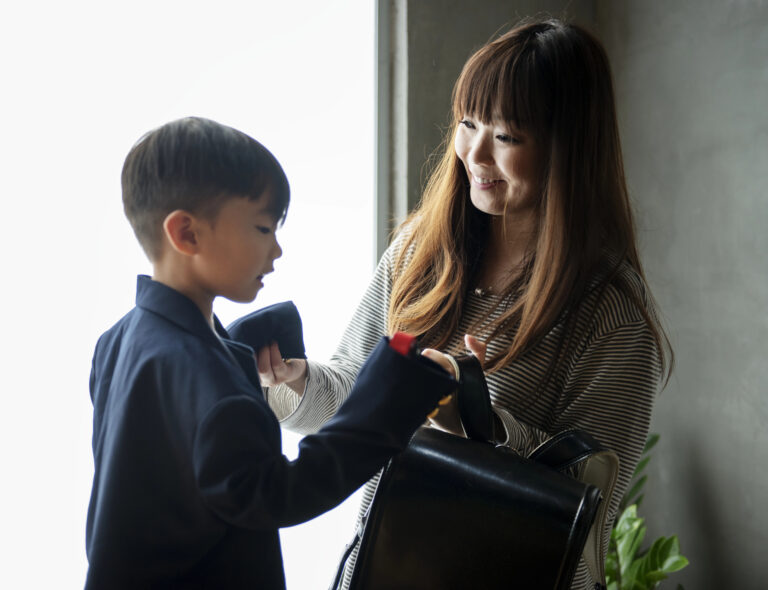
Japanese culture has a few staple greeting phrases used when leaving and returning home. These are a fundamental part of every Japanese person’s day.
If you’ve ever watched any Japanese slice-of-life drama, movie or anime, you are very likely to have heard these greetings!
These phrases are essential to learn if you want to immerse yourself in the true Japanese lifestyle!
Let’s find out how exactly to use them:
Ittekimasu
行ってきます
I’m off (and I’ll be back)
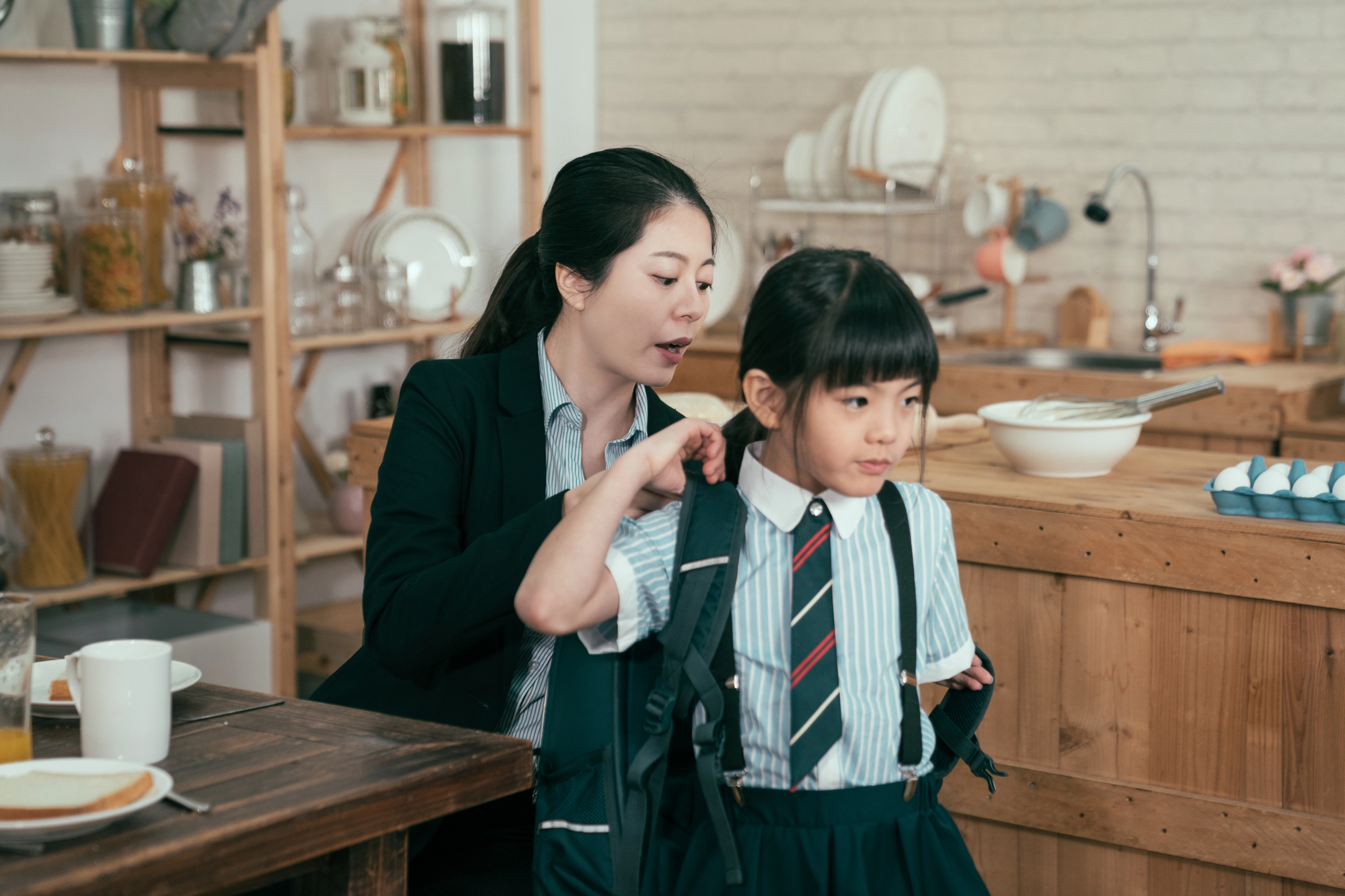
Ittekimasu (行ってきます / いってきます) uses the te-form of the verb iku (行く), ‘to go’, linking it to the second verb ‘to come’, kuru (来る / くる), which in this phrase is used in its polite masu-form (来ます / きます).
Literally, it means ‘I’m going and coming back’.
That being said, all of these phrases have become set phrases in their own right, so you don’t need to overthink their grammatical makeup or literal meaning!
Ittekimasu is used to inform those at home that you are going somewhere, and that you intend to come back home.
You would call out ittekimasu when slipping on your shoes and heading out the door to go to work or school for the day, or perhaps popping out to the shop.
Learn the essential Japanese you need for your trip with this FREE Absolute Beginner course. Start with simple greetings, useful phrases and everyday Japanese, even if you've never studied Japanese before.
Itterasshai
行ってらっしゃい
See you later
Itterasshai (行ってらっしゃい / いってらっしゃい) is the usual response to the phrase, ittekimasu. It’s of course said by the party who is staying behind.
Itterasshai is again made up of the te-form of iku (‘to go’), linking it to the rasshai (らっしゃい) which is short for irassharu (いらっしゃる), an honorific verb meaning ‘to come’ or ‘to be’.
Literally, it means ‘go and come back!’ But again, it’s simply a set phrase, so you don’t have to worry about a literal translation.
Usually, the use of an honorific verb implies high respect and along with that, some personal distance. But since it has become a set expression, it is used even casually among family members and friends, expressing warmth.
It is used to wish the person on their way out safe travels and to let them know that you will be waiting to see them again soon.
Tadaima
ただいま
I’m back

If you left the house saying ittekimasu, upon your return you should say tadaima (ただいま).
Unlike the other phrases we’ve looked at, tadaima is not a verb. Rather, it’s an abbreviated announcement. To break it down, tada (ただ) means ‘just’ or ‘merely’ and ima (いま) means ‘now’.
Again, rather than word-for-word translation, we should focus on its social function: to announce your return home upon walking through the door! The origins and translations of these phrases are just interesting to know, and can be helpful for remembering them!
Okaerinasai
お帰りなさい
Welcome home

Okaerinasai (お帰りなさい / おかえりなさい) is the response to tadaima, said by the person who is already at home.
The phrase is made up of three different elements:
- The honorific o (お)
- The noun-like stem of the verb ‘to return’, kaeru (帰る) which is kaeri
- Nasai (なさい) which is a polite imperative form of ‘to do’.
Even though it’s in an imperative form, it is not actually a command in today’s language, simply a conventional set phrase.
Depending on how polite you would like to come across, you can say the full phrase okaerinasai, or the casual, shorter okaeri!
Essential phrases for visiting Japan
So now you know the meaning and usage of these four Japanese phrases said when leaving and coming home.
These phrases are most commonly used in the home, by people who live together. So, they’re essential to learn if you’ll be staying with a family in Japan, for example!
They can also be used in a few situations outside the home. For example, when someone leaves the workplace for a meeting or lunch break, but they intend to return.
You may also hear staff at a traditional ryokan or hotel calling okaerinasai! to welcome you back after a day’s sightseeing.
Are you planning a trip to Japan? Learn more essential Japanese with our top recommended Japanese course, JapanesePod101. They have a beginners travel Japanese course, and it’s FREE!
Learn the essential Japanese you need for your trip with this FREE Absolute Beginner course. Start with simple greetings, useful phrases and everyday Japanese, even if you've never studied Japanese before.
Related posts
- 14+ Basic Japanese Greetings You’ll Use Every Day
- Must-Know Phrases for Visiting a Japanese Home
- 20+ Useful Japanese Homestay Phrases for A Smooth Trip
- Visiting a Japanese Home? Essential Etiquette You Need to Know!
📌Pin this for later

Hannah is a half Irish/half Japanese girl living in Ireland. Her love for Japan and the Japanese language led her to studying languages and translation in university where she specialised in Japanese. She spent a year studying abroad at Rikkyo University in Tokyo. In her free time, Hannah enjoys using her sewing machine to upcycle clothes and create new pieces!