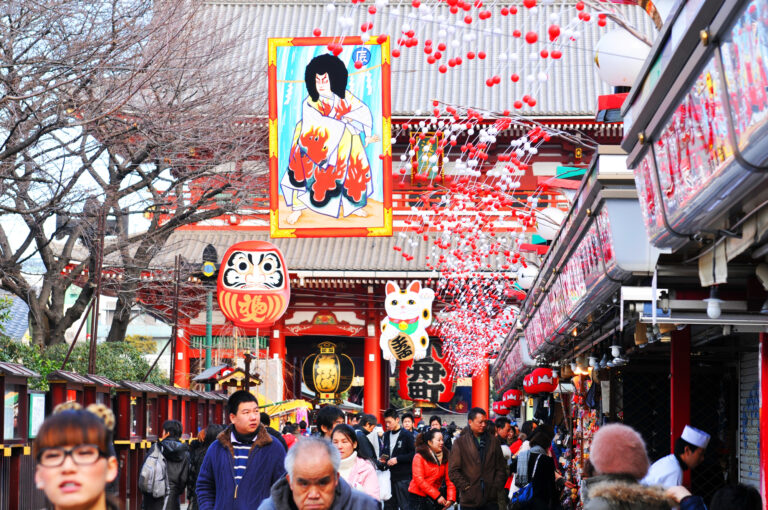
Japan in January is full of fresh starts, fun traditions and frosty scenery!
January is one of the most important times of the year for Japanese culture, with an array of nationwide and local celebrations to bring in the New Year.
Whether you’re planning a winter trip or just want to enjoy a little Japanese culture at home, here’s what January in Japan has to offer:
Japanese festivals and events in January
Shōgatsu
Shōgatsu is Japan’s New Year season and the biggest celebration of the year!
New Year is a family time in Japan. January 1 is a national holiday, but most people have a few days off work between around the 29th December and the 3rd January. Many return to their hometowns to visit family.
Many people visit shrines to pray for good luck, eat traditional osechi dishes and send nengajō (New Year postcards).
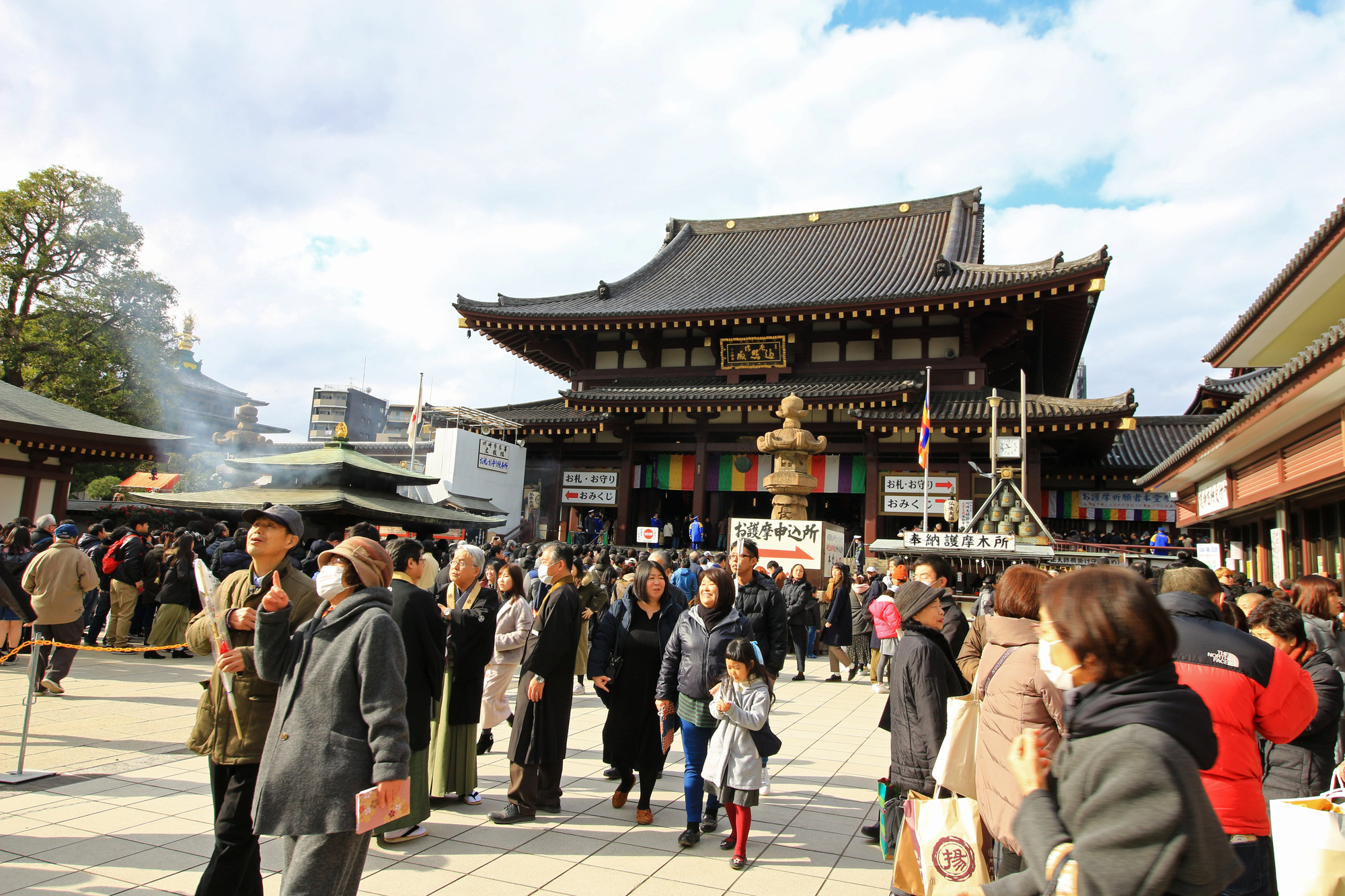
The first visit to a shrine or temple in the new year is called hatsumōde. It’s common to buy a paper fortune slip called omikuji to see what the new year might have in store for you.

🎍Read more: New Year in Japan: Traditions, Food and Celebrations
Coming of Age Day (Seijin no Hi)
Held on the second Monday of January, Seijin no Hi celebrates all young people who have reached the age of maturity in the past year.
Traditionally the age of maturity was 20, but in 2022 the Japanese government officially lowered this to 18. However, many municipalities still celebrate 20-year-olds on this day.
Local city halls hold ceremonies for the young people who have come of age. There are also family events, shrine events, school reunions, and many other kinds of parties!
Seijin no hi is a chance for young people to dress to impress in traditional Japanese clothing.
Young women wear furisode (a long-sleeved kimono reserved for unmarried women), along with elaborate hair and make up. Young men traditionally wear hakama trousers and haori jackets, although many chose to wear a suit.

Seijin no hi is a national holiday in Japan. In 2026 it will be held on Monday 12th January.
Winter illuminations
Many of Japan’s famous winter illuminations continue throughout January. Cities, parks and shopping districts light up the dark evenings with huge displays.
If you’re visiting in winter, illuminations are an easy way to enjoy some festive magic.

Daruma market season
January is also the season for daruma markets (daruma-ichi). These pop-up events sell brightly coloured daruma dolls, which symbolise perseverance and good fortune.
People buy a daruma at the start of the year, paint in one eye when making a wish and paint in the other when the wish comes true. Then, you can take them back to the temple for burning at the end of the year.

You can start using a daruma doll at any time of year, but it’s traditional to buy one in January, in line with setting goals for the new year.
Things to do in Japan in January
Are you visiting Japan in January? It’s one of the best months for winter travel! Here are a few things you can enjoy:
- Visit a shrine for hatsumōde. Even as a visitor, you are welcome to attend and to observe one of Japan’s most important traditions.
- Enjoy an onsen trip. Cold weather makes hot springs feel extra luxurious.
- See winter illuminations in Tokyo, Osaka, Kobe or any major city.
- Try winter comfort foods such as oden, nabe hot pots and steaming bowls of ramen.
- Head to the mountains for skiing or snowboarding. Japan’s powder snow is famous worldwide.
Japanese activities to try at home in January
Not travelling this winter? You can still bring a little Japanese New Year atmosphere into your home.
Play fukuwarai
Fukuwarai is a traditional New Year party game where you place facial features onto a blank face while blindfolded. It reminds me a bit of the game ‘pin the tail on the donkey’.
The results are usually hilarious, especially for children!
Traditionally, the faces are the Edo-era comic characters Okame and Hyottoko, but there are lots of modern versions using cartoon characters and more!
I found this cute free printable so you can play fukuwarai at home. The website is in Japanese, but just click on the images of the blank faces and the face parts and it will open as a pdf for you to download and print.
As you can see from this beautiful woodblock print I found, fukuwarai has been played in Japan for a very long time!

Other Japanese January activities you might enjoy:
- Design and send nengajō (Japanese New Year’s card) – free printable
- Cook a warming Japanese winter dish like oden or mochi soup.
- Do a mini home ‘refresh’ to welcome the new year, inspired by Japanese New Year cleaning traditions.
Useful Japanese vocabulary for January
- shōgatsu (正月 / しょうがつ) New Year
- hatsumōde (初詣 / はつもうで) first shrine visit of the year
- nengajō (年賀状 / ねんがじょう) New Year postcard
- hatsuhinode (初日の出 / はつひので) first sunrise
- osechi ryōri (お節料理 / おせちりょうり) traditional New Year food
- fukuwarai (福笑い / ふくわらい) New Year party game
- dorama (達磨 / だるま) daruma doll
- seijin no hi (成人の日 / せいじんのひ) Coming of Age Day
- illuminēshon (イルミネーション) winter illuminations
- onsen (温泉 / おんせん) hot spring
Related posts
- How to Say Happy New Year in Japanese
- New Year in Japan: Traditions, Food and Celebrations
- 35+ Awesome Japanese Winter Words You Need To Know
Want to learn Japanese this New Year?
Whether you’re planning a trip to Japan this year, or simply enjoy learning about Japanese culture from the comfort of home, why not make this the year you learn some simple Japanese!
Our top recommended online course is JapanesePod101. They have hundreds of audio and video lessons that will take you from total beginner to fluency.
Try it for free!
JapanesePod101 is our top recommendation to learn Japanese online. We love the fun, current audio lessons and interactive online tools. Sign up for your free lifetime account and see for yourself!

Rebecca is the founder of Team Japanese. She spent two years teaching English in Ehime, Japan. Now back in the UK, she spends her time blogging, self-studying Japanese and wrangling a very genki toddler.