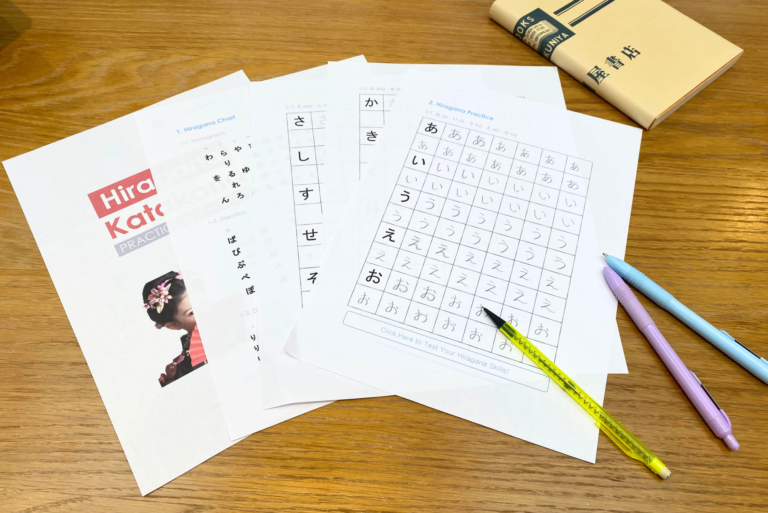
If you’re starting Japanese from scratch, learning hiragana is your very first step.
Japanese uses three writing systems, but beginners begin with the two phonetic alphabets – hiragana and katakana. Together, they’re known as the kana.
They represent sounds, not meanings. And once you can read them, you can pronounce any Japanese word correctly.
That’s why I always recommend starting with hiragana practice sheets for beginners.
Master the kana first, and everything else – vocabulary, grammar, even kanji – becomes much easier.
Best FREE hiragana worksheets for beginners
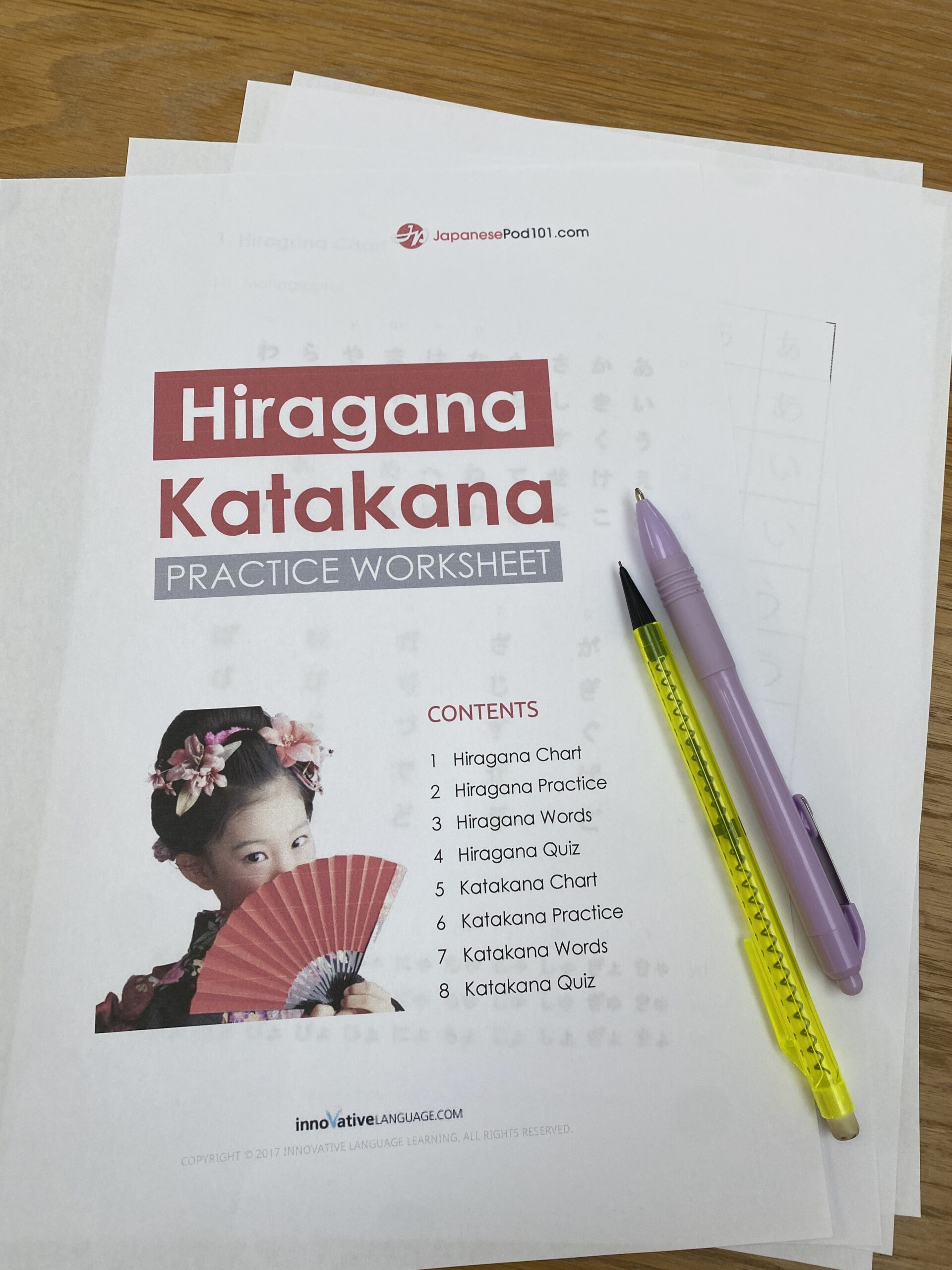
This free workbook is the best resource I’ve found for learning hiragana.
These free hiragana practice sheets for beginners walk you through every single hiragana character step by step.
You’ll get guided tracing lines first, then space to write each character on your own so you can build confidence as you go.
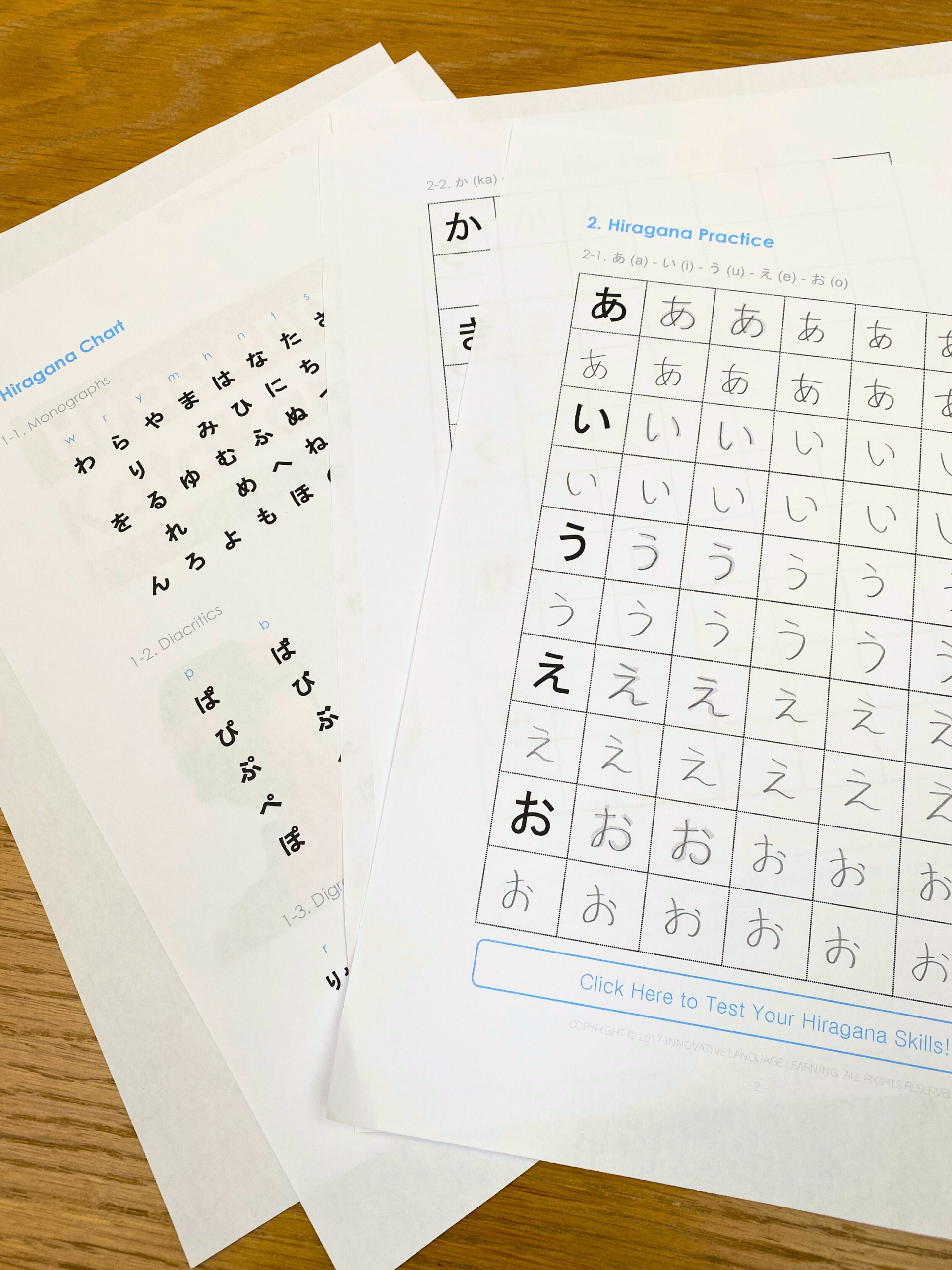
You’ll also find katakana included, so you can start recognising both Japanese phonetic alphabets from the beginning.
My biggest tip is to print it more than once.
(And that’s the beauty of a free PDF – you can print it as many times as you like!)
Repetition is what makes hiragana stick. The more you write it, the more natural it feels.
Don’t worry about getting it perfect the first time. Just keep going!
Inside the free workbook, you’ll also get:
- Printable hiragana and katakana charts – these are great for sticking on your wall or adding to your study notebook
- Simple writing exercises to test your new knowledge
- Kana flashcards to practise recognition
- Extra tracing and copying space for hands-on practice
One quick note: you’ll need to create a free account to download the workbook. But it’s completely free and no card details are required.
If you’re just starting out with Japanese, this is a simple, structured way to practise every day without feeling overwhelmed.