September in Japan sits between summer and autumn. The heat starts to ease off (although much of the country is still hot and humid!) and children are back at school. There is a sense of a change in season, although it’s not yet fully autumn.
September traditions focus on reflection, harvest and respect. One of the most interesting customs this month is tsukimi (moon viewing).
Whether you are travelling or enjoying Japanese culture from home, here’s what September looks like in Japan.
Festivals and events in September in Japan
Respect for the Aged Day (Keirō no Hi)
Keirō no Hi (敬老の日 / けいろうのひ) is a national holiday held on the third Monday of September. It celebrates older people and shows appreciation for their contributions to society.
Families may visit grandparents and give small gifts or share meals together. Television programmes often feature stories about ageing and longevity.
Autumn Equinox Day (Shūbun no Hi) and Higan
Autumn Equinox Day (Shūbun no Hi / 秋分の日 / しゅうぶんのひ) is a national holiday marking (you guessed it) the equinox: the point when day and night are equal length.
It falls during Higan, a Buddhist period observed in both spring and autumn for a few days either side of the equinoxes. During Higan, many families visit and clean family graves, and offer flowers or food.
The season is associated with balance and reflection as the seasons change.
Tsukimi (moon viewing)
Tsukimi (月見 / つきみ) is the custom of appreciating the autumn moon, also called the harvest moon.
This is held in September or early October, depending on the lunar calendar. In 2026 it is on 25-28 September.
It is closely connected to the harvest season and traditionally involves giving thanks for crops and nature. The most important night is known as jūgoya, when the moon is at its fullest.
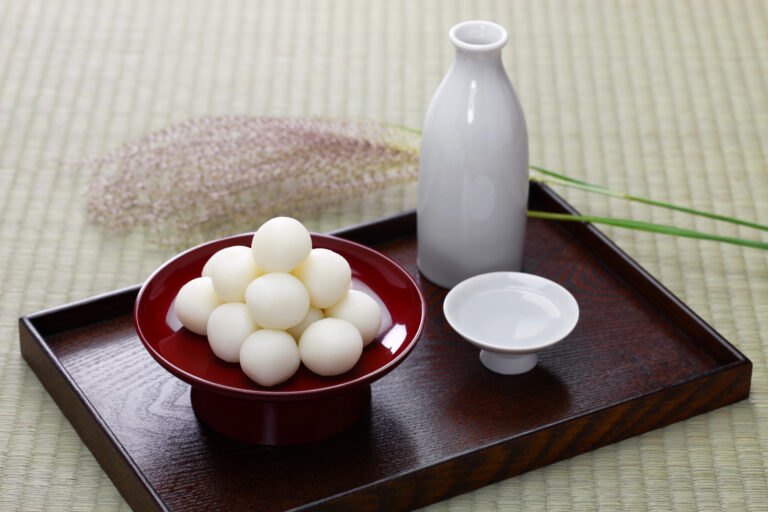
People decorate with pampas grass (susuki) and make offerings of round rice dumplings called tsukimi dango, along with other seasonal goods such as chestnuts or sweet potatoes. These round shapes symbolise the moon and abundance.
Traditionally people gather for moon viewing parties in open spaces where the full moon is clearly visible, often with a picnic. Think an autumn, nighttime version of hanami, but more subdued!
In some places, temples, gardens or other sites host special evening openings for moon viewing.
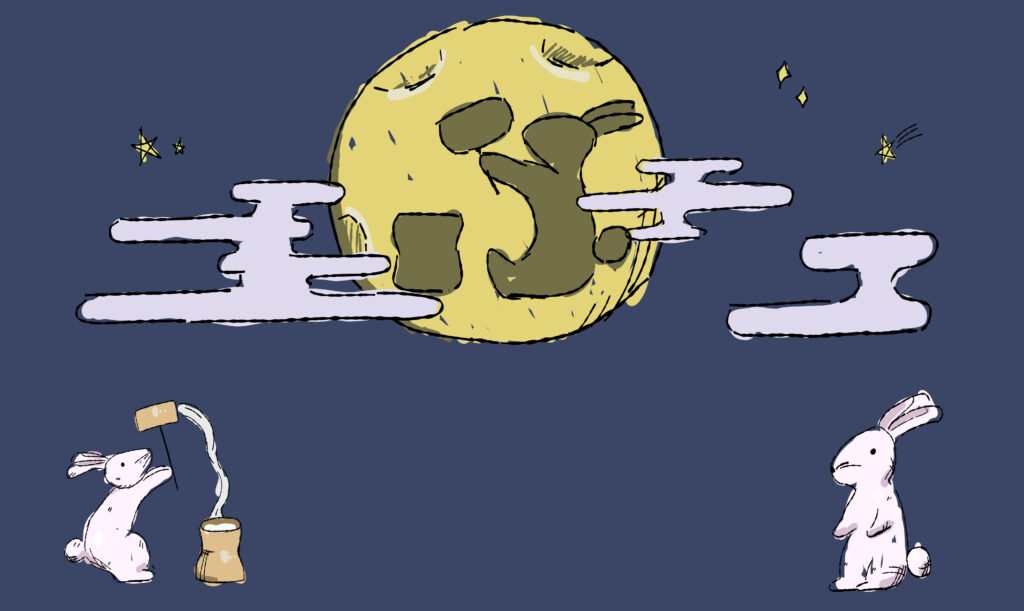
Tsukimi is also linked to the folk story of a rabbit said to live on the moon, pounding rice to make mochi. This image appears often in decorations, sweets and children’s books at this time of year.
Tsukimi is not a national holiday but it’s still widely celebrated and is a well-known symbolic event across Japan.
Typhoon season
September falls within Japan’s typhoon season. Not every region is affected, but travellers should be aware of possible heavy rain or strong winds, particularly in southern and coastal areas.
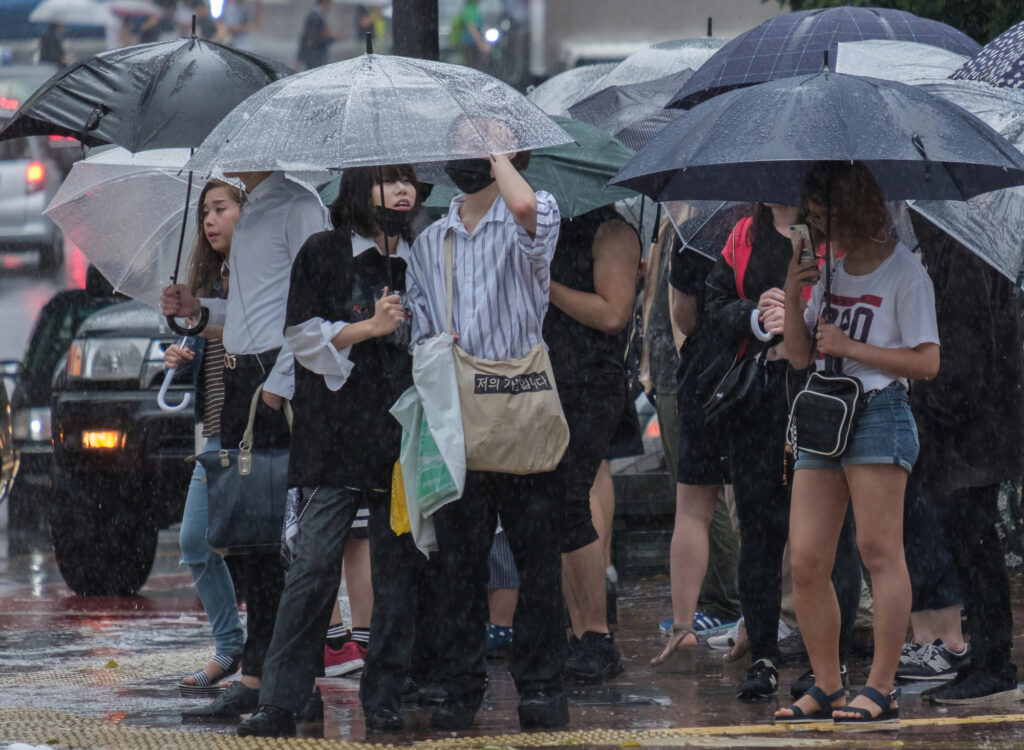
Local transport and weather updates are important during this time. You can track typhoons here.
Things to do in Japan in September
September is calmer than peak summer, with fewer tourists thanks to the return to school.
- Enjoy cooler evenings for walking and sightseeing.
- Visit temples or gardens during equinox and Higan periods.
- Experience tsukimi events or moon-viewing displays.
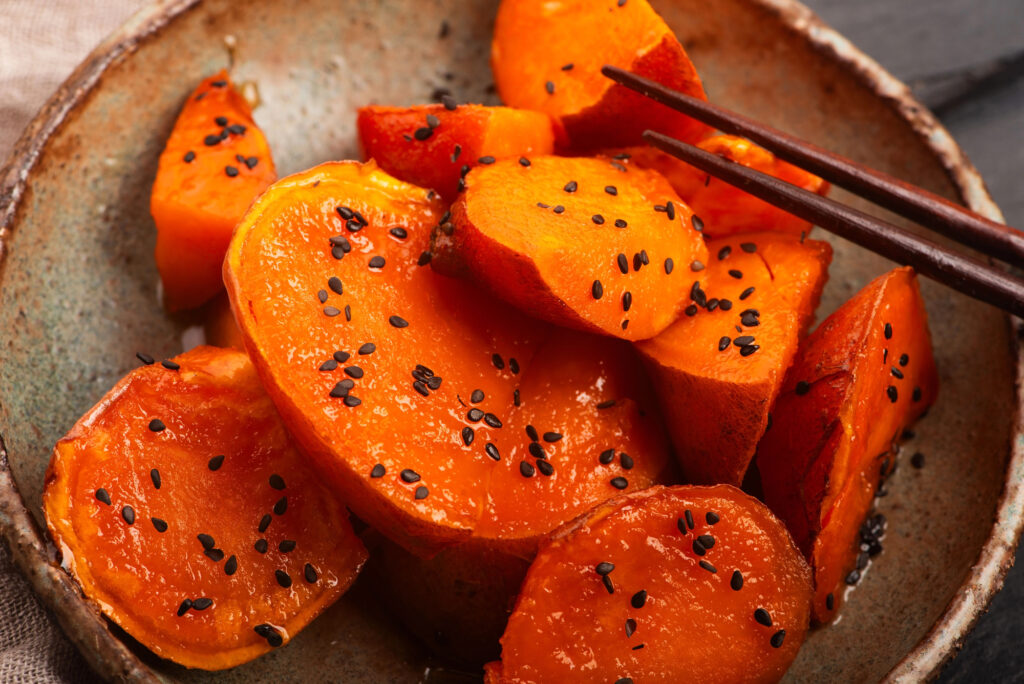
- Try early autumn foods such as chestnuts, sweet potatoes and seasonal rice dishes.
- Look out for local early autumn festivals and harvest festivals (lots of smaller events happening but vary but region).
What is the weather like in September in Japan
September weather varies across Japan. Expect it to still be very hot and humid, especially at the beginning of the month, but evenings are starting to cool down.
Tokyo and central regions usually range from 22 to 29°C (72 to 84°F), with humidity gradually decreasing. Northern areas cool more quickly, while southern regions can remain hot.
Be aware of possible typhoons during this season too.
In short, the weather is changeable, so pack light layers, along with a waterproof jacket or umbrella in case of rain.
Japanese activities to try at home in September
September is a good month for quieter, reflective activities and noticing the change in season.
- Try a simple tsukimi celebration by displaying pampas grass at home or heading out to see the full moon in late September.
- Cook a Japanese autumn dish using sweet potato, mushrooms or rice.
- Learn about Higan and ancestor traditions. Honour your own ancestors by displaying photos and offering prayers or gratitude.
- Make a cute origami rabbit to celebrate tsukimi!
- Refresh your study routine with autumn-themed Japanese vocabulary or listening practice.
- Embrace the back-to-school vibes with a new Japanese study routine!
Useful Japanese vocabulary for September
- Keirō no Hi (敬老の日 / けいろうのひ) – Respect for the Aged Day
- Shūbun no Hi (秋分の日 / しゅうぶんのひ) – Autumn Equinox Day
- Higan (彼岸 / ひがん) – equinox period
- tsukimi (月見 / つきみ) – moon viewing
- susuki (薄 / すすき) – pampas grass
- aki (秋 / あき) – autumn
- kuri (栗 / くり) – chestnut
- satsumaimo (さつま芋 / さつまいも) – sweet potato
- taifū (台風 / たいふう) – typhoon
- aki no yoru (秋の夜 / あきのよる) – autumn night
Related posts
- 20 Beautiful Japanese Seasonal Words for Autumn
- How to Say Moon in Japanese (+ More Beautiful Moon Vocab)

JapanesePod101 is our top recommendation to learn Japanese online. We love the fun, current audio lessons and interactive online tools. Sign up for your free lifetime account and see for yourself!
Rebecca is the founder of Team Japanese. She spent two years teaching English in Ehime, Japan. Now back in the UK, she spends her time blogging, self-studying Japanese and wrangling a very genki toddler.