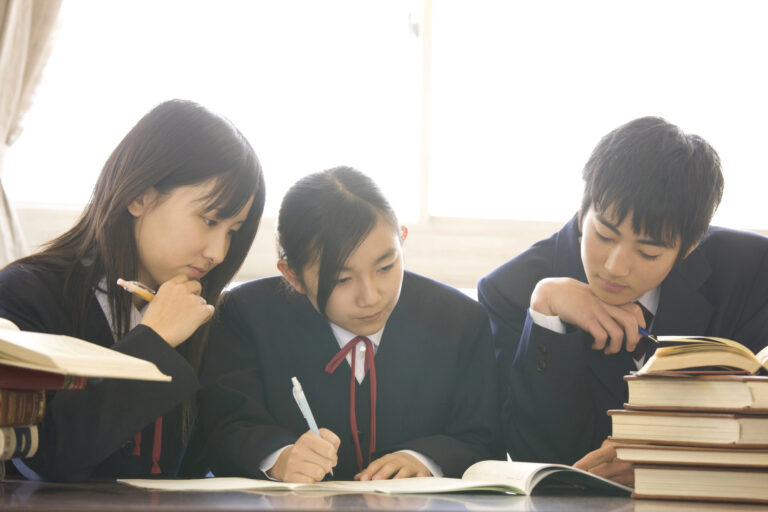
Have you ever wondered what it would be like to attend school in Japan? Or maybe you are thinking about attending yourself, or perhaps even teaching in Japan!
The Japanese education system is quite unique and you may find it slightly different to your own school experience growing up.
In this post we will go through some useful Japanese classroom phrases and school-related vocabulary. We’ll also look at a breakdown of typical daily routines and etiquette in a Japanese school setting.
It’s a must-read for anyone attending or working in a Japanese school!
The Japanese school year
Firstly, let’s learn about the Japanese school calendar!
Having grown up in Europe, late August / beginning of September would signify the ‘back to school’ period for me. However, in Japan, the start of the school year actually begins in April and ends the following March.
Here is a very general breakdown of the Japanese school calendar:
- The first term runs from April until late July when the students get their summer break.
- The second term is from September to late December when students then receive time off for the New Year season.
- Finally the third term starts back in January and the school year will then wrap up in March.
Japanese school vocabulary: types of schools
| English | Kanji | Hiragana | Romaji |
| Kindergarten / preschool | 幼稚園 | ようちえん | youchien |
| Primary / elementary school | 小学校 | しょうがっこう | shougakkou |
| Junior high school | 中学校 | ちゅうがっこう | chuugakkou |
| Secondary / senior high school | 高校 | こうこう | koukou |
| University / college | 大学 | だいがく | daigaku |
| Cram school | 塾 | じゅく | juku |
Japanese school culture and etiquette
Not only can the school terms in Japan be unfamiliar to us, but we would likely find the school life of Japanese students rather different also!
Let’s go through some of the fundamentals of the life of Japanese schoolchildren.
Children commute without parents
For example, it is quite common for schoolchildren (even primary school aged children) to commute to school without their parents. This includes walking and even taking public transport alone!
Thankfully, Japan is one of the safest countries in the world which is what allows parents to let their children have this responsibility at such a young age.

Indoor slippers and uniforms
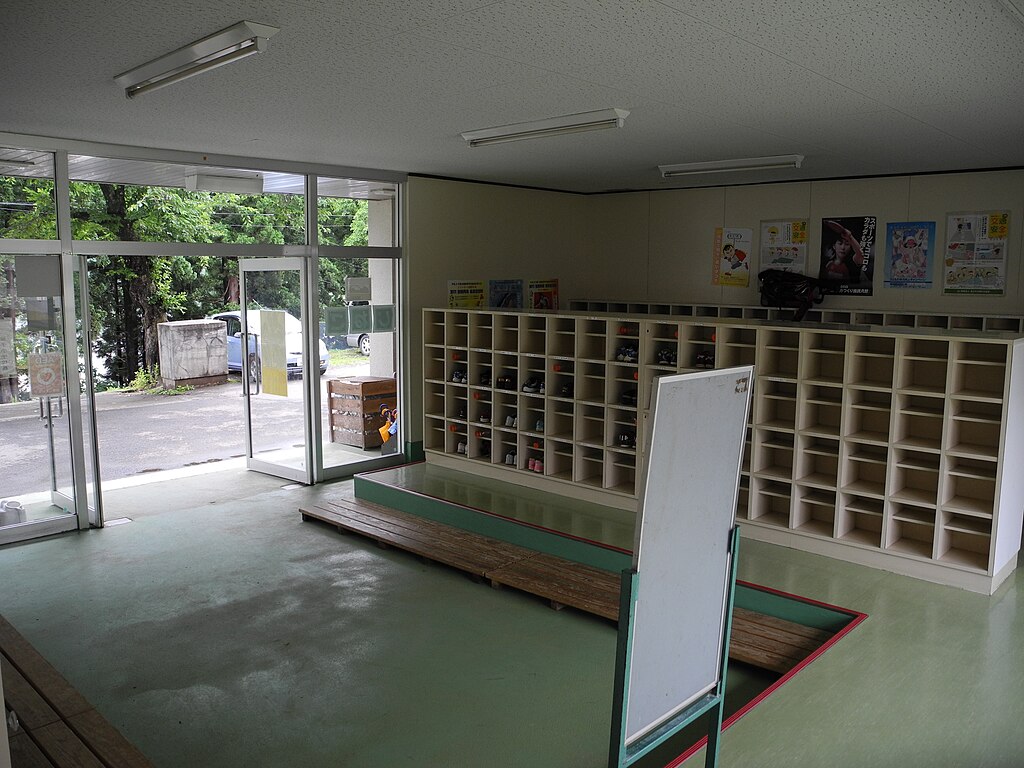
Upon arriving at school, you will probably find a bunch of cubby-holes or lockers at the entrance. This is where you are to take off your ‘outdoor shoes’ and put on a pair of uwabaki (上履き / うわばき) which are special school slippers to be worn indoors.

You will find that most middle school and high school students wear a school uniform which are instantly, recognizably Japanese!
This is particularly true for the girls uniform, which is characterized by its ‘sailor-esque’ style shirt, skirt and knee-high socks. Boys often wear a white shirt, suit-like jacket or blazer with neat pants.
Some primary schools also have uniforms, though it is equally as common to see primary school students in their own clothes.
That being said, regardless of whether they have uniforms or not, almost all young students can be spotted by their bright yellow hats, a symbol of safety, especially when commuting alone!
They also sport a unique type of leather Japanese school bag known as a randoseru.


Classroom manners
In Japanese schools, the students generally stay in their classroom and it is the teachers who move from class to class when the bell rings.
When your teacher walks into the classroom, it is customary for the whole class to stand and bow as a greeting. The same is done when the class ends.
Each week or so, one student is appointed to lead the charge when it comes to instructing their fellow classmates to stand and bow for the teacher by exclaiming kiritsu! ki wo tsuke! rei! chakuseki!
Common Japanese classroom phrases
There are a lot of set phrases you’ll hear often in a Japanese classroom. Here are the essentials:
| English | Kanji | Hiragana | Romaji |
| Good morning | おはようございます | おはようございます | ohayou gozaimasu |
| Hello / good afternoon | こんにちは | こんにちは | konnichiwa |
| Stand | 起立 | きりつ | kiritsu |
| Attention | 気をつけ | きをつけ | ki wo tsuke |
| Bow | れい | れい | rei |
| Sit | 着席 | ちゃくせき | chakuseki |
| Be quiet | 静かにして | しずかにして | shizuka ni shite |
| Raise a hand | 手を挙げる | てをあげる | te wo ageru |
| Yes | はい | はい | hai |
| I understand | 分かりました | わかりました | wakarimashita |
| I don’t understand | 分かりません | わかりません | wakarimasen |
| One more time please | もう一度お願いします | もう一度おねがいします | mou ichido onegaishimasu |
| Excuse me | すみません | すみません | sumimasen |
| I have a question | 質問があります | しつもんがあります | shitsumon ga arimasu |
Classroom cleaning
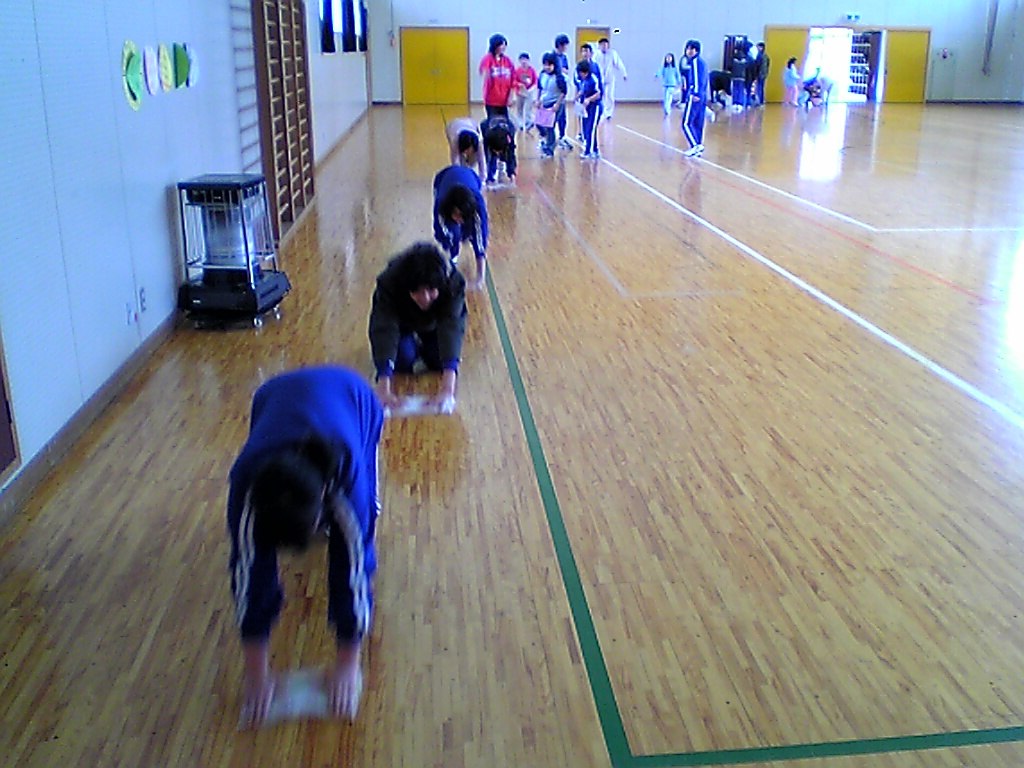
Another special thing about Japanese schools is souji (掃除 / そうじ), aka ‘cleaning time’! It can also be referred to as seisou (清掃 / せいそう).
Souji usually takes place everyday after lunch time. Depending on the week, each student has a different task, ranging from cleaning the blackboard dusters to sweeping or mopping the floor.
.jpg)
As a result, schools do not generally employ janitors, and students learn to work as a team and keep their space neat and tidy!
Kyuushoku lunch
One of the most wholesome parts of daily Japanese school life is kyuushoku lunches! (給食 / きゅうしょく). Most Japanese primary and middle schools provide a hot lunch for students.
These lunches usually consist of typical teishoku style Japanese foods such as grilled fish, pork katsu, or chicken karaage, rice or noodles, side salads and of course miso soup.
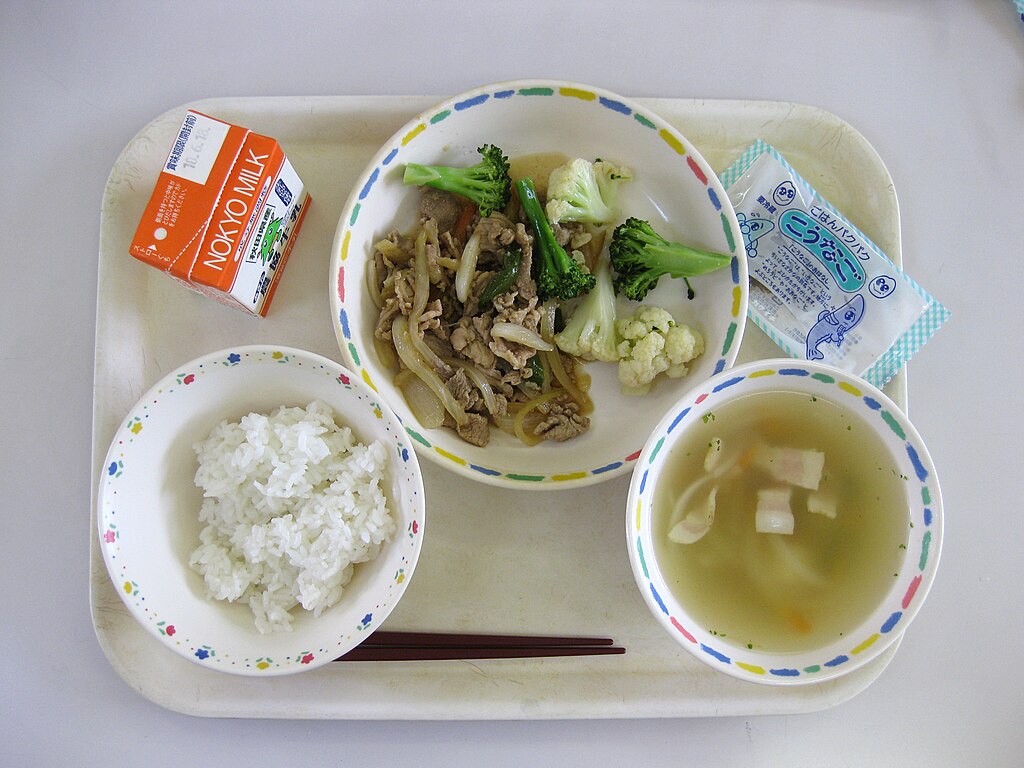

The difference between Japanese kyuushoku lunch and a western style cafeteria lunch is that like the souji cleaning, these hot meals are served by students!
Students work together to arrange their single desks to a few group lunch tables, while other students, donned in a white overcoat and hat for sanitary purposes, stand at the top of the class dishing out the meal of the day to their fellow students.
In high school, there is also often a hot lunch service, though this is most often than not in the form of a cafeteria run by adult staff or ‘lunch ladies’ so to speak.
Japanese school facilities
| English | Kanji | Hiragana | Romaji |
| Classroom | 教室 | きょうしつ | kyoushitsu |
| Faculty / staff room | 職員室 | しょくいんしつ | shokuin shitsu |
| Library | 図書館 | としょかん | toshokan |
| Cafeteria | 食堂 | しょくど | shokudo |
| Gymnasium | 体育館 | たいいくかん | taiikukan |
| Yard | 校庭 | こうてい | koutei |
Bukatsudou
A big part of a Japanese students’ life is bukatsudou (部活動 / ぶかつどう), which is ‘club activities’ in English.
It is super common in Japan for school students to attend extracurricular club activities such as music, art or sports clubs after their classes have finished for the day.
Other useful Japanese school vocab
| English | Kanji | Hiragana | Romaji |
| Class | 授業 | じゅぎょう | jyugyou |
| Term | 学期 | がっき | gakki |
| Teacher | 先生 / 教師 | せんせい / きょうし | sensei / kyoushi |
| Professor | 教授 | きょうじゅ | kyouju |
| Principal | 校長 | こうちょう | kouchou |
| Student | 学生 | がくせい | gakusei |
| Pupil | 生徒 | せいと | seito |
| Study | 勉強 | べんきょう | benkyou |
| Book | 本 | ほん | hon |
| Backpack | リュック | りゅっく | ryukku |
| Japanese style bag pack | ランドセル | らんどせる | randoseru |
| Homework | 宿題 | しゅくだい | shukudai |
| Exam | 試験 | しけん | shiken |
| Question | 質問 | しつもん | shitsumon |
| Break / recess | 休憩 / 休み時間 | きゅうけい / やすみじかん | kyuukei / yasumi jikan |
| Present | 出席 | しゅっせき | shusseki |
| Absent | 欠席 | けっせき | kesseki |
| Late | 遅刻 | ちこく | chikoku |
School subjects in Japanese
| English | Kanji | Hiragana | Romaji |
| Maths | 数学 | すうがく | suugaku |
| Science | 理科 | りか | rika |
| Japanese | 国語 | こくご | kokugo |
| English | 英語 | えいご | eigo |
| Geography | 地理学 | ちりがく | chirigaku |
| Art | 美術 | びじゅつ | bijyutsu |
| Music | 音楽 | おんがく | ongaku |
| History | 歴史 | れきし | rekishi |
| P.E | 体育 | たいいく | taiiku |

JapanesePod101 is our top recommendation to learn Japanese online. We love the fun, current audio lessons and interactive online tools. Sign up for your free lifetime account and see for yourself!

Hannah is a half Irish/half Japanese girl living in Ireland. Her love for Japan and the Japanese language led her to studying languages and translation in university where she specialised in Japanese. She spent a year studying abroad at Rikkyo University in Tokyo. In her free time, Hannah enjoys using her sewing machine to upcycle clothes and create new pieces!