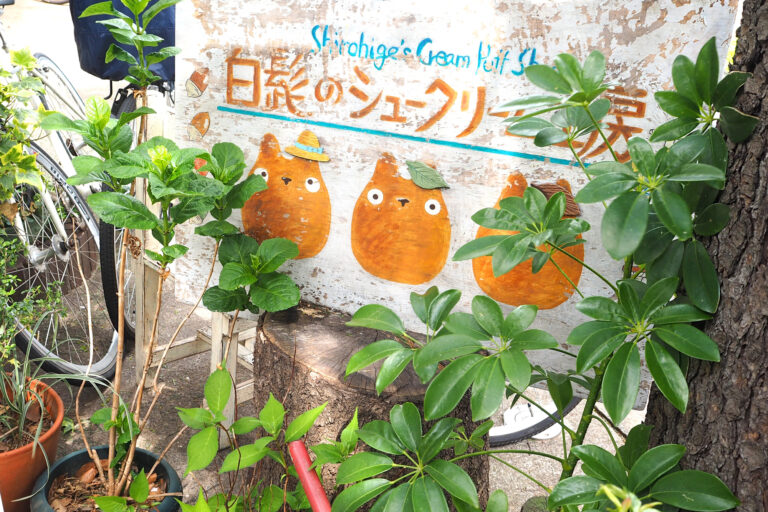
The Studio Ghibli movies are some of Japan’s most beloved creative works. For many, it’s our first introduction to Japanese culture.
Not all Studio Ghibli films are set in Japan. Many take place in imagined worlds or European-inspired settings.
But a small group of Ghibli films are unmistakably set in Japan – from post-war countryside villages to contemporary suburban streets.
These movies don’t teach us about Japanese culture directly. Instead, they show it through everyday routines, food, work, childhood, social expectations and family life.
Below are eight Studio Ghibli movies that are set in Japan, and what each one can teach us about Japanese culture.
My Neighbor Totoro

My Neighbor Totoro is set in rural Japan in the 1950s, at a time when many families still lived close to the land. The countryside setting is based on real places, and the details of daily life are normal rather than romanticised.
The film shows satoyama life – a term for humans living in harmony with nature, in the space where villages, mountains, forests, and farmland meet.
Rice paddies, vegetable plots, dirt roads, and small shrines are just part of everyday life, not something special or separate. This reflects how nature and daily routines are closely linked in much of rural Japan.
Family life is another key theme. The children walk to school on their own, help with chores, and take on responsibilities at home. This kind of independence is common in Japan, and is treated as normal rather than something impressive.
Lots of low-key Japanese cultural details appear naturally throughout the film:
- Wooden houses with sliding doors
- Shared family baths
- Seasonal food and home cooking
- Strong ties to the local community
The character of Totoro himself comes from Japanese beliefs about nature spirits, but the heart of the film is rooted in everyday family life. That mix of folklore and ordinary routines is a big part of why Totoro feels so quintessentially Japanese.
If you’re starting with just one Ghibli film to learn about Japan, Totoro is the obvious choice!
Only Yesterday

Only Yesterday moves between life in Tokyo and rural Yamagata, showing two sides of everyday Japan.
The story is all about memories and ordinary experiences, rather than big plot moments.
A large part of the film looks back at childhood in 1960s Japan. There are reflections on school life, classroom rules and social pressure, showing how children are expected to fit in and follow group norms from an early age.
The countryside scenes show a more traditional way of life. Farming is presented as hard, seasonal work, closely tied to food, weather, and local knowledge rather than nostalgia.
What we can learn about Japanese culture:
- Japanese school routines and classroom expectations
- Pressure to conform
- Strong opinions from family members
- Urban work culture
- Seasonal farming and food production
- Regional differences between city and countryside
Only Yesterday gives a grounded look at how social expectations shape childhood and adult life in Japan. It’s one of the most realistic Ghibli movies set in the country to catch an insight into everyday life in Japan.
Grave of the Fireflies
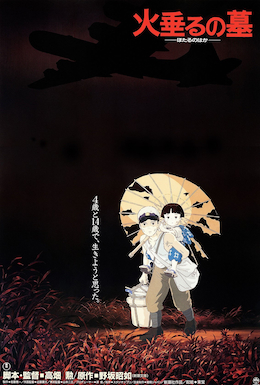
Grave of the Fireflies is set in Kobe during the final months of World War II, following the bombing by the US air force in March 1945. It shows the war through the daily lives of ordinary civilians, especially children.
Warning: this is a very heavy and upsetting film, and unlike most other Studio Ghibli movies, it is not suitable for children. That said, I believe it is an important film to watch in order to understand Japan’s history and wartime experience.
The movie gives a stark look at how war affects food, housing, and families. Everyday routines and decisions are based on survival.
Family responsibility is a central theme. Older siblings are expected to step up in adult-like ways, even in impossible situations.
It also deals with the theme of pride, especially in accepting/refusing help – a theme that has been interpreted differently by Japanese and Western audiences.
Insights into Japanese culture:
- Civilian life in Japan during WWII
- Food shortages and rationing
- Children taking on adult roles early
- Emotional restraint in extreme situations
- Social pressure and judgement during hardship
Grave of the Fireflies is difficult to watch, but it offers an important insight into a specific moment in Japanese history, showing how everyday life continued under severe difficulty and loss.
Pom Poko
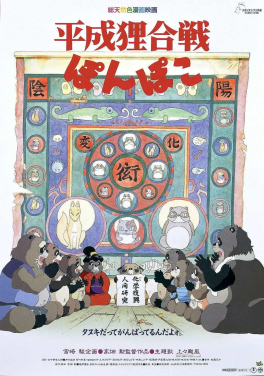
Pom Poko is set in modern Japan during a period of rapid urban development. The story follows a group of tanuki (racoon dogs) as their natural habitat is gradually replaced by housing projects, roads, and new towns.
The film draws heavily on Japanese folklore, but its setting and concerns are very real. It reflects how post-war expansion reshaped large parts of Japan, especially around growing cities, and what was lost in the process.
Pom Poko also shows how Japan thinks about land use and progress. Development is treated as largely unavoidable. The conflict comes from competing needs – housing for people versus space for nature.
What we can learn about Japanese culture:
- Tanuki as traditional folklore figures
- Environmental impact of development
- Community organisation and group decision-making
- Public protests and resistance
Pom Poko is one of Ghibli’s most culturally specific films. It uses familiar folklore to comment on modern Japanese society, making it a strong example of how traditional ideas and contemporary life often overlap in Japan.
The Wind Rises

The Wind Rises is set in Japan from the 1910s through to the early years of World War II. It follows Jirō Horikoshi, an aircraft engineer, during a period of rapid modernisation and growing nationalism.
The film focuses heavily on work and craftsmanship. Jirō’s identity is closely tied to his profession, and his dedication to improving his skills is treated as a lifelong pursuit rather than a means to an end.
This reflects how deeply work, pride, and purpose are often linked in Japanese society.
Historical events shape everyday life throughout the story. Earthquakes, illness, and political pressure appear without being overexplained, showing how individuals continue with their responsibilities even as larger forces unfold around them.
What we can learn about Japanese culture:
- Strong respect for craftsmanship and technical skill
- Personal identity tied to work
- Perseverance in the face of hardship
- Tension between personal dreams and social responsibility
- Daily life continuing alongside major historical events
The Wind Rises offers insight into how ambition, duty and historical circumstance intersect in Japan.
Spirited Away
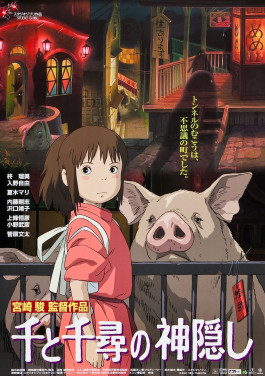
Spirited Away begins in real-life modern Japan before moving into a spirit world based on various Japanese beliefs and traditions.
Although much of the film takes place outside the human world, the behaviour and social structures it shows are strongly Japanese.
The bathhouse at the centre of the story is especially important. Bathing has a big cultural significance in Japan, and the bathhouse functions almost like a micro-society, complete with hierarchy, rules, and expectations around behaviour.
Chihiro’s journey is shaped by learning how to function within that system.
Food also plays a major role. Eating is tied to identity and self-control, and the consequences of ignoring social boundaries are made very clear early on in the film.
What we can learn about Japanese culture:
- Shintō beliefs and the idea of spirits existing alongside humans
- Workplace hierarchy and seniority
- Strong expectations around effort and responsibility
- Bathhouse culture and communal spaces
Spirited Away doesn’t explain these ideas directly, but they underpin almost every part of the story. That’s why it resonates so strongly, even as a fantasy film.
The Tale of the Princess Kaguya
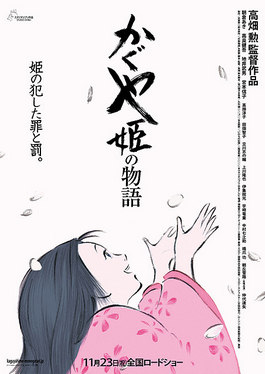
The Tale of the Princess Kaguya is based on one of Japan’s oldest folktales and is set in a historical Japanese setting (likely the Heian period), long before modern life. The film heavily features traditional Japanese art, clothing and architecture.
Much of the story contrasts rural life with life at court.
Early scenes show simple farming homes, handmade tools, and close contact with nature. Later, the setting shifts to aristocratic houses, layered kimono, formal gardens, and strict rules of behaviour.
Every detail reflects the period. Clothing, hairstyles, interiors, and even how people sit or move are based on historical references rather than modern interpretation.
What we can learn about Japanese culture:
- Classical clothing and court dress
- Early rural village life and farming tools
- Formal etiquette in aristocratic households
- Seasonal awareness in daily life
- Traditional Japanese aesthetics
The Tale of the Princess Kaguya is one of the best Ghibli films for visualising historical Japan, and is especially interesting since it offers a contrast between everyday rural life and elite court culture.
Whisper of the Heart
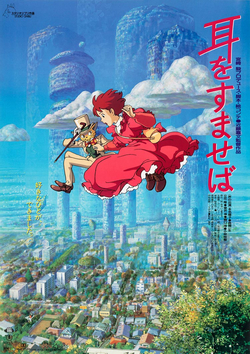
Whisper of the Heart is set in suburban Tokyo and shows everyday Japanese life with very little exaggeration. The locations are ordinary and recognisable, which is exactly what makes the film so useful from a cultural point of view.
Most of the story takes place in everyday locations such as schools, homes, libraries, train stations, and neighbourhood streets. These are the kinds of spaces people move through every day, and the film pays close attention to how they’re used.
Public transport plays a big role. Trains, stations, ticket gates, and walking routes are part of daily routine, especially for students. Home life is also shown in small details, from shared meals to compact living spaces.
What we can learn about Japanese culture:
- Japanese school environments and classrooms
- Daily use of trains and public transport
- Suburban neighbourhoods and apartment living
- Family meals and home routines
- After-school clubs and hobbies
Unlike some of the more fantastical offerings, Whisper of the Heart stands out for how well it shows realistic, contemporary settings.
If you want to see what everyday life looks like for a Japanese teenager, this is one of the clearest examples in the Ghibli catalogue.

What Ghibli gets right about Japanese culture
What all these movies have in common is attention to everyday detail. Rather than ‘teaching’ Japanese culture outright, they show it through places, routines and interactions.
Across these Japan-set Ghibli films, you repeatedly see:
- How people use personal and public spaces: homes, schools, streets, trains, and workplaces
- The role of food, seasons, and routines
- Clear links between people, land, and local communities
None of this is presented as unusual within the films themselves. It’s simply life as it’s lived, whether that’s in a 1950s countryside village, a Tokyo suburb, or a historical court setting.
That’s why these films work so well as cultural windows. They don’t teach through explanation, they teach through observation.
If you want to understand Japan beyond stereotypes, these eight Ghibli films are a solid place to start.
Which is your favourite Ghibli film? And has it taught you anything about Japan? Let us know in the comments!
📌Pin this for later

Rebecca is the founder of Team Japanese. She spent two years teaching English in Ehime, Japan. Now back in the UK, she spends her time blogging, self-studying Japanese and wrangling a very genki toddler.