When it comes to learning languages, we usually start off with fun and light topics such as greetings, colours or daily conversation.
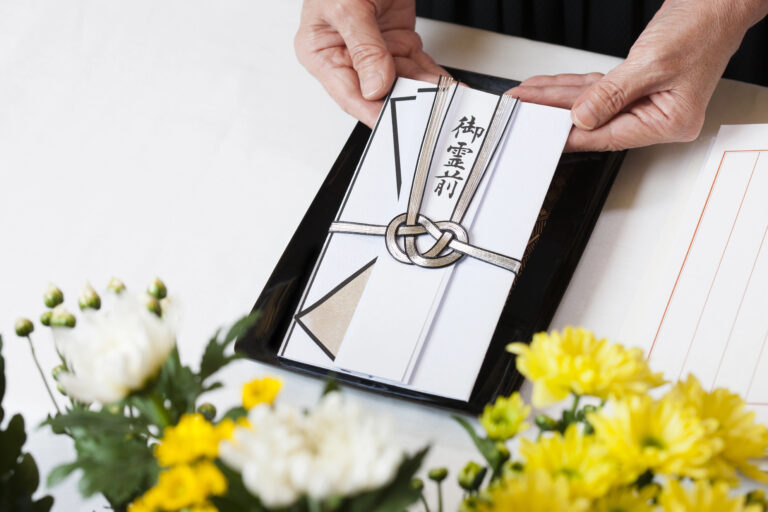
However, there may come a time when you have to express your condolences and offer support to those around you who find themselves going through difficulties, such as bereavement.
As we know, Japanese is all about politeness and register. Since we want to try our best to be respectful during these trying times, learning how to express condolences, or in Japanese, okuyami (お悔やみ / おくやみ) can be a bit daunting.
Here are some appropriate respectful phrases to offer condolences in Japanese:
Go shuushou sama desu
ご愁傷様です
Sorry for your loss
One of the most common phrases which can be directed towards someone recently bereaved is go shuushoo sama desu (ご愁傷様です / ごしゅうしょうさまです).
Shuushou translates as ‘grief’, so this polite phrase is an acknowledgment that one must be grieving terribly and can be likened to “sorry for your loss’ in English.
Okuyami moushiagemasu
お悔やみ申し上げます
My condolences
Oyukami (お悔やみ) are ‘condolences’ in Japanese, while moushiagemasu (申し上げます / もうしあげます) is the polite verb for ‘to say’ or ‘to express’.
To add a more heart felt sentiment, you can say kokoro kara (心から / こころから) okuyami moushiagemasu, emphasising that the condolences are ‘from the bottom of my heart’.
These two phrases focus on offering sympathies to the bereaved i.e. the person who has lost a loved one. On the other hand, there are also some phrases which are more directed towards the deceased:
Go meifuku wo inori shimasu
ご冥福を祈りします
I pray for their soul to rest in peace
Go meifuku wo inori shimasu (ご冥福をお祈りします / ごめいふくをいのりします) is a phrase that wishes well for the soul of the deceased.
Meifuku can be translated as ‘happiness in the next world’ or ‘heavenly bliss’, while inoru is the verb ‘to pray’.
Yasuraka ni o nemuri kudasai
安らかにお眠りください
Rest in peace
Yasuraka ni o nemuri kudasai (安らかにお眠りください / やすらかにおねむりください) is used in much the same way we use ‘rest in peace’ in English.
Yasuraka means ‘peaceful’ or ‘relaxed’ while o nemuri refers to the eternal sleep.
Douka odayaka ni oyasumi kudasai
どうか穏やかにおやすみください
May you rest peacefully (poetic sounding)
Douka odayaka ni oyasumi kudasai (どうか穏やかにおやすみください / どうかおだやかにおやすみください) is another customary phrase in the context of expressing condolences.
That being said, it is more of a written phrase and not as commonly spoken, as it can come across as quite poetic sounding.
It is quite similar in meaning to the previous phrase ‘rest in peace’, just with alternative terms. Odayaka means ‘calm’ or ‘peaceful and oyasumi means ‘rest’.
Osorei irimasu
恐れ入ります
You have my sincere gratitude
You will hear the phrase osorei irimasu (恐れ入ります / おそれいいります) as a common response to condolences received.
Rather than just saying the casual phrase arigtou gozaimasu, osorei irimasu has a literal translation of ‘ I am obliged’, but gives across the feeling of gratitude and appreciation for the other person’s kind words.
Even during life’s most somber moments, it is embedded in Japanese culture for both the bereaved and those offering condolences to show humility, appreciation and utmost respect.
We hope these phrases will help you communicate with your Japanese friends and acquaintances during life’s difficult times.
Related posts

Hannah is a half Irish/half Japanese girl living in Ireland. Her love for Japan and the Japanese language led her to studying languages and translation in university where she specialised in Japanese. She spent a year studying abroad at Rikkyo University in Tokyo. In her free time, Hannah enjoys using her sewing machine to upcycle clothes and create new pieces!