
Most Studio Ghibli films feel so complete and original that it’s easy to assume they were written purely for the screen!
But several of them actually began as novels, manga, or even much older folktales.
It’s not always obvious which is which. In some cases the film follows the original closely. In others, Studio Ghibli changed the setting or tone quite a lot.
Knowing which movies were adapted from books can add another layer to your viewing experience. And it may even give you something new to read once the credits roll!
If you’ve ever wondered which Studio Ghibli movies are based on books, here’s a simple breakdown of some of Ghibli’s most popular works and the stories that inspired them.
Howl’s Moving Castle
Howl’s Moving Castle is based on the novel Howl’s Moving Castle by British author Diana Wynne Jones.
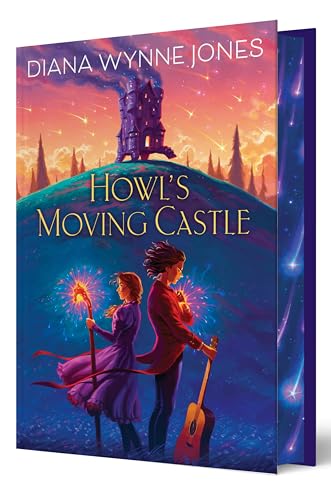
In both the film and the novel, Sophie, a young hat-maker, is cursed with an old woman’s body and becomes entangled with a mysterious wizard and his moving castle in a war-torn fantasy world.
The original book was published in 1986 and is set in a fictional European-style world. Studio Ghibli kept the main characters – Sophie, Howl, and Calcifer – but made some changes to the tone and themes of the story.
In the novel, the plot is more playful and fast-moving. It has a lot of different characters and sub-plots that didn’t make it into the movie. There is also a focus on magical rules and character dynamics.
The film shifts the emphasis, adding a strong anti-war element and also emphasising themes of old age, love and loyalty.
Overall the movie is fairly different from the book but if you enjoy the movie, the book is worth reading on its own terms.
It feels familiar, but different enough to offer a new perspective on the characters and their world.
Kiki’s Delivery Service
Kiki’s Delivery Service is based on the Japanese novel Kiki’s Delivery Service (魔女の宅急便) by Eiko Kadono.

The original book was published in 1985. After the success of the Ghibli adaptation, which came out in 1989, Kadono published several more novels in the series.
Studio Ghibli’s film, like the novel, follows the story of young witch Kiki leaving home with her cat Jiji, starting her delivery service, and learning to live independently.
The book is more of a collection of lots of small adventures and misadventures, and day-to-day moments. The movie adds more of an overarching story and a focus on Kiki developing her confidence and identity.
If you love the film’s coming-of-age theme, you will enjoy the book which offers more detail about Kiki’s world and continues her story beyond what we see on screen.
When Marnie Was There
When Marnie Was There is based on the British novel When Marnie Was There by Joan G. Robinson.

The original book was published in 1967 and is set in Norfolk in the English countryside.
For the film adaptation, Studio Ghibli moved the story to rural Hokkaido, Japan, adjusting cultural details while keeping the core relationship and emotional themes.
The story is about a lonely girl sent to the countryside, who forms a mysterious friendship that starts to reveals hidden truths about her past.
The novel focuses closely on the themes of loneliness and friendship. The film adaptation is pretty similar in theme and story, but reshapes the setting to fit the Japanese environment.
If you’ve seen the film, the book feels both familiar and different. The characters and emotional heart remain, but the location and cultural details give each version its own identity.
Arrietty
Arrietty is based on the novel The Borrowers by Mary Norton, a classic English children’s book.

The original book was published in 1952 and is set in England. Studio Ghibli moved the story to modern-day Japan, but kept the central idea of tiny people living secretly inside a human house and “borrowing” everyday items to survive.
The film stays fairly close to the original concept and main characters, though some details and relationships are simplified. The book can be quite dramatic and suspenseful, whereas the film is more gentle.
The novel is also very culturally British, for example it has some themes like class and heritage, whereas the Ghibli adaptation is set in Japan and does have a different feel.
If you enjoy Arrietty’s world, try picking up the original book to learn more about the Borrowers’ society and more adventures beyond what’s shown in the film.
And if you enjoy that, there are four more books in the Borrowers series to get stuck into!
Tales from Earthsea
Tales from Earthsea is based on the Earthsea series by American author Ursula K. Le Guin.

Rather than adapting a single novel, the Ghibli movie combines elements from several books in the series, including characters, themes, and parts of the world-building.
Because of this, the story in the film differs quite a lot from any one book.
The original Earthsea novels are known for their thoughtful exploration of power and balance. The Ghibli Earthsea movie does keep some of those ideas but it has more of a straightforward ‘good vs evil’ plot.
If you’re curious about the source material, the books will give you a deeper and more layered version of the Earthsea world. But don’t be surprised if you can’t find the Ghibli story in the books.
From Up on Poppy Hill
From Up on Poppy Hill is based on the manga From Up on Poppy Hill (コクリコ坂から) by Chizuru Takahashi and Tetsuro Sayama.
![From Poppy Hill (Paperback Comics) (2010) ISBN: 4048545140 [Japanese Import]](https://m.media-amazon.com/images/I/81doh6Kf-RL._SY385_.jpg)
The original manga was published in the 1980s and is set in 1960s Yokohama. The film keeps the core setting and characters but reshapes parts of the story to create a tighter emotional focus.
Like the movie, the manga centres on school life, family responsibility, and post-war Japan. Studio Ghibli streamlines the plot and leans more heavily into the nostalgic atmosphere.
If you enjoy the film’s setting and tone, the manga offers a slightly different take on the same time period and relationships, with more detail in certain storylines.
Whisper of the Heart
Whisper of the Heart is based on the manga Whisper of the Heart (耳をすませば)
by Aoi Hiiragi.

The original manga was published in 1989. Studio Ghibli kept the main characters and the core coming-of-age theme, but adjusted parts of the story and added new elements, including the expanded role of the Baron.
The tone of both versions is grounded and there is a focus on everyday life, creativity, and first love. The film streamlines the plot and gives the story a stronger emotional arc, especially around Shizuku’s writing journey.
If you like the film’s realistic setting and character growth, the manga offers a slightly different version of the same story, with extra scenes and variations in how events unfold.
More source material behind Ghibli movies
The above are some of the more famous Ghibli movies based on books, but here are some more movies that are either based on – or take inspiration from – real life books, manga and other sources:
- Grave of the Fireflies – based on a semi-autobiographical short story of the same name by Akiyuki Nosaka.
- The Cat Returns – based on the manga The Cat Returns by Aoi Hiiragi. Features the Baron character introduced in Whisper of the Heart, also by Hiiragi.
- Only Yesterday – based on the manga Only Yesterday by Hotaru Okamoto and Yuko Tone.
- My Neighbours The Yamadas – based on the comic strip Nono-chan by Hisaichi Ishii, originally published in the Asahi Shimbun newspaper.
- Laputa Castle in the Sky – Laputa is the name of a floating island in Gulliver’s Travels by Jonathan Swift, which directly inspired the island in the movie. However, the movie isn’t an adaptation and does not share many other elements with the book. The screenplay is an original story by Hayao Miyazaki.
- The Tale of the Princess Kaguya – this is a 10th century Japanese folktale, originally called The Tale of the Bamboo Cutter.
- Ponyo – loose re-imagining of The Little Mermaid by Hans Christian Andersen. Original screenplay by Hayao Miyazaki.
- Nausicaä of the Valley of the Wind – based on a manga written by Miyazaki.
- Porco Rosso – based on a manga written by Miyazaki.
- The Wind Rises – inspired by the real-life engineer Jiro Horikoshi, and also takes the name and some other elements from the novella The Wind Has Risen by Tatsuo Hori.


Ghibli moves not based on books
These Ghibli movies are original screenplays, and not based on any specific book or manga – although many of them have elements inspired by Japanese folklore.
- My Neighbor Totoro
- Spirited Away
- Princess Mononoke
- Pom Poko
Of course, you can get manga and books adapted from the movies now, but the movies came first!
Where Studio Ghibli stories really come from
As we’ve seen, many Studio Ghibli movies have roots in novels, manga, folktales, and even real history.
Sometimes the movies closely follow the source material. Other times, the studio just take some inspiration from elsewhere and create something almost completely new.
If you’re a Studio Ghibli fan, knowing where these stories began adds another layer to your enjoyment and understanding of the movies.
The books on this list will also give you something new to explore once you’ve finished watching!
If you love Studio Ghibli, there’s often a book waiting behind the movie.
Have you read any of these books? Have I missed any? Let me know in the comments!
FAQ about Ghibli movies based on books
Related posts
- 8 Ghibli Movies Set in Japan (and What They Teach Us About Japanese Culture)
- Best Ghibli Movies for Learning Japanese
- 10 Japanese Books To Read That Will Transport You To Japan
📌 Pin this for later



Rebecca is the founder of Team Japanese. She spent two years teaching English in Ehime, Japan. Now back in the UK, she spends her time blogging, self-studying Japanese and wrangling a very genki toddler.