Most Studio Ghibli movies feel totally magical, and that’s why we love them!
But many of the details they show are very real, and we can actually learn a lot about Japanese culture from watching Ghibli movies.
Look closely, and you’ll spot everyday Japanese traditions and customs woven into the stories.
Shrines, school routines, shared baths, seasonal food, close-knit communities – these aren’t just background details. They reflect habits and customs that are still part of life in Japan today.
Here are some common Japanese traditions and cultural practices you’ll notice in Ghibli movies, and what they mean in real life.
Shinto beliefs and respect for kami
Shrines and nature spirits appear again and again in Studio Ghibli films. This reflects the influence of Shinto, Japan’s traditional belief system.
The two films most heavy on Shinto symbolism are My Neighbor Totoro and Spirited Away.
Totoro himself is generally thought to be a type of kami. In Shinto, kami (神 / かみ) are spiritual presences that can exist in trees, rivers, mountains, and other parts of nature.
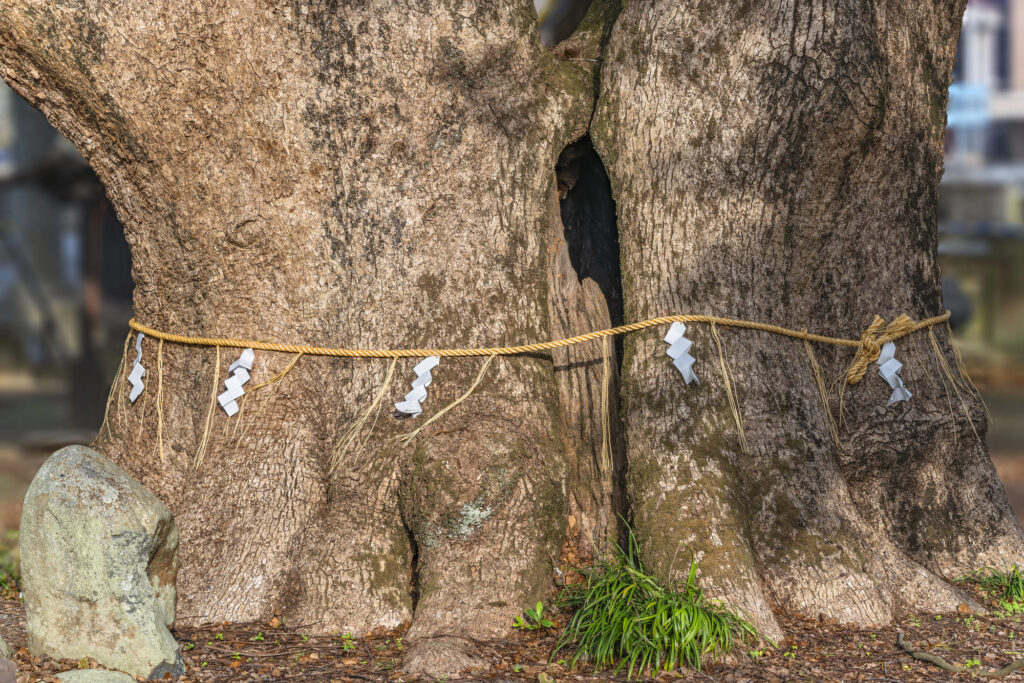
Totoro lives in a huge camphor tree, which are often found at shrines and beleived to house kami. His tree is decorated with shimenawa ( しめ縄 / しめなわ) – plaited rice straw rope often used to mark sacred places.
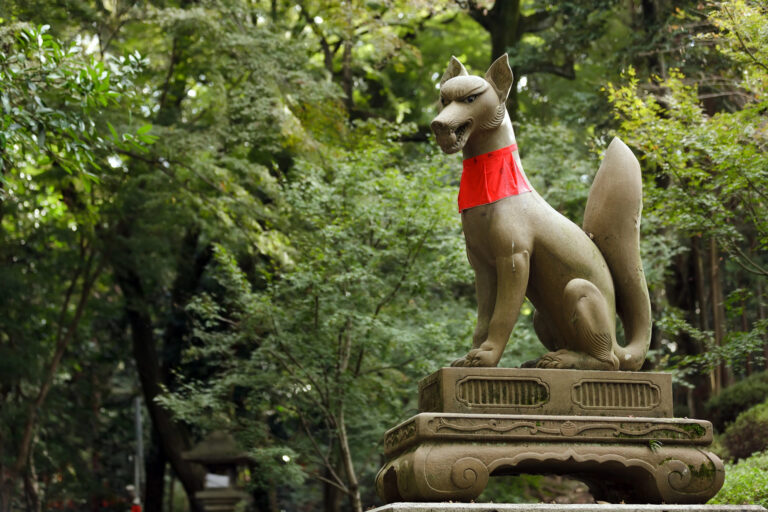
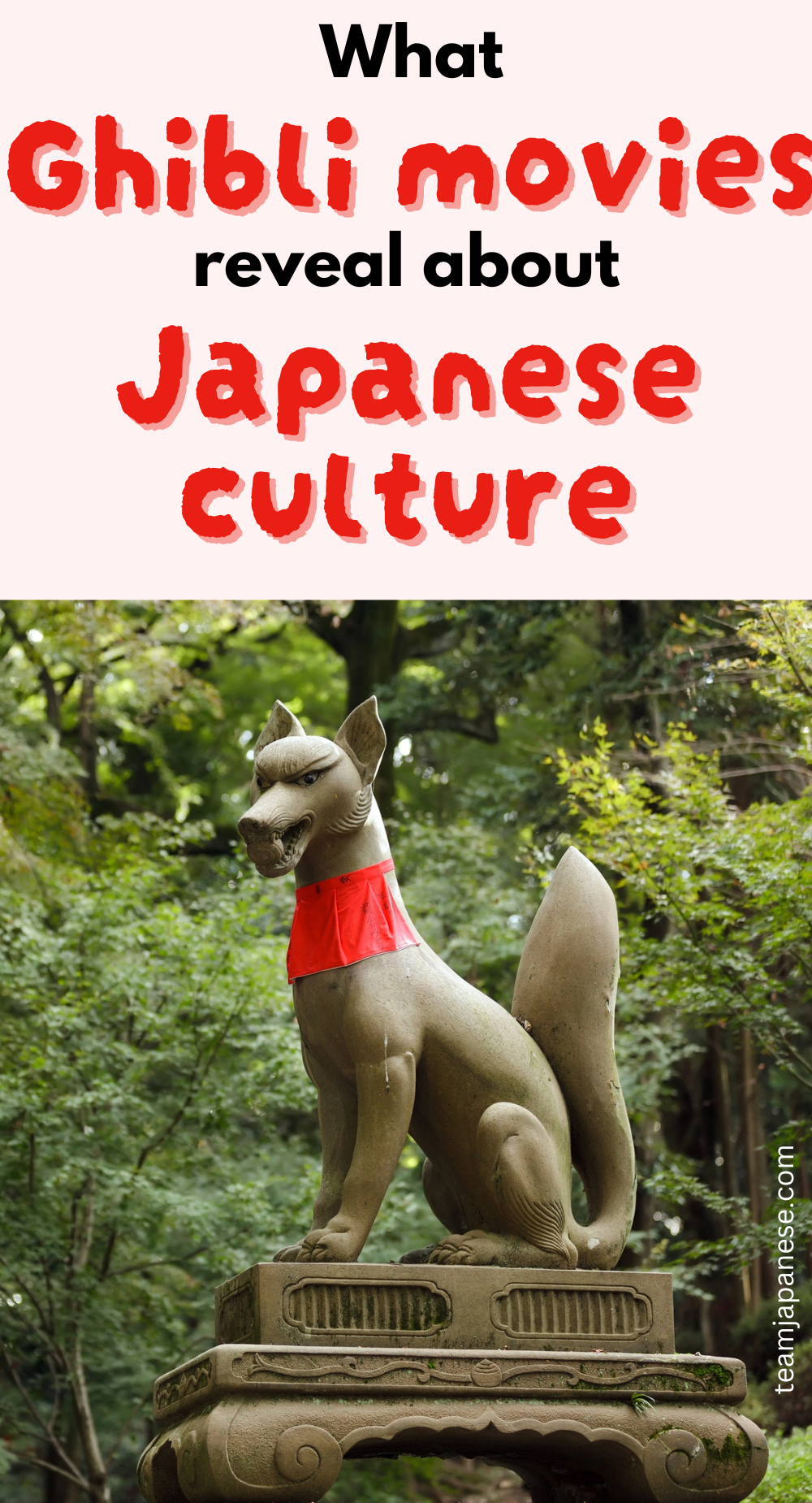
There are lots of other images from Shintoism throughout the film that show how much it is part of daily life in Japan, for example we see shrines around the community, including some with fox statues which represent the kami of rice.
Spirited Away builds an entire fantasy world around the idea of kami. The spirits in the bathhouse reflect the common belief that unseen beings exist alongside humans.
There are also lots of other signs of Shintoism, for example when the family take the shortcut at the beginning of the movie they pass a torii gate and some smaller stone roadside shrines, symbolising that they are passing into a sacred or spiritual place.
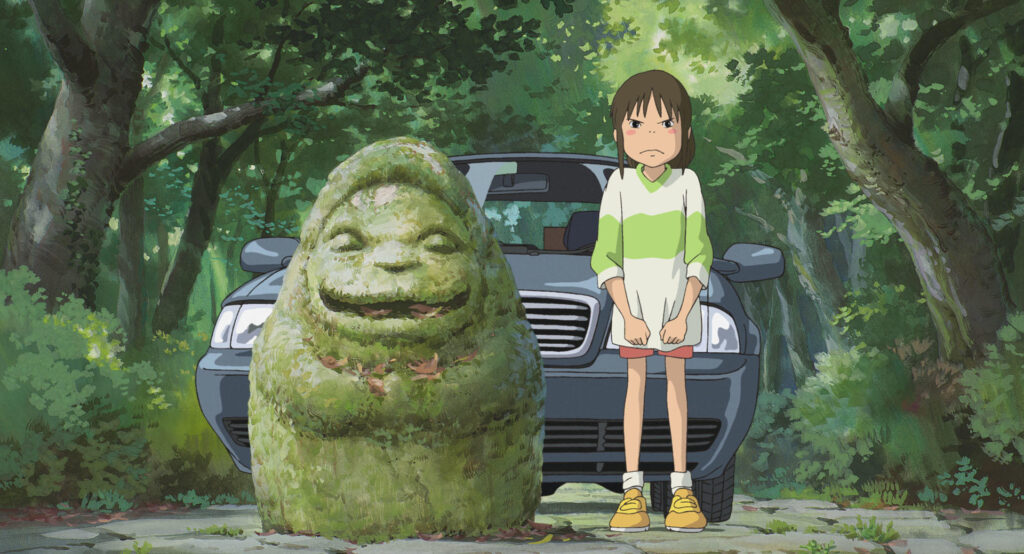
At the entrance to the tunnel there is a dōsojin statue, a kind of kami associated with boundaries and crossroads.
In Japan, Shinto is baked into the culture. Shinto customs and respect for kami are observed by most people, even those who aren’t overly ‘religious’ in the way we think of that word in the west.
Shrines are also part of normal life. People might visit at New Year, during a local festival, or before an important exam. Most people will bow, wash their hands at the entrance and maybe throw a coin in the box for the kami. It’s not so much about practising a religion, more just about showing respect.

Bathing culture
Having a bath in Japan is not just about getting clean. It’s also about relaxing and resetting, and it’s an essential part of the daily routine. Public baths are also a very common part of Japanese culture.
In My Neighbor Totoro, there’s a scene where Mei and Satsuki take a bath together with their father. Although many westerners find this scene strange, it is very normal in Japan for parents to bathe together with young children. After all, even strangers bathe together at the bathhouse or onsen!
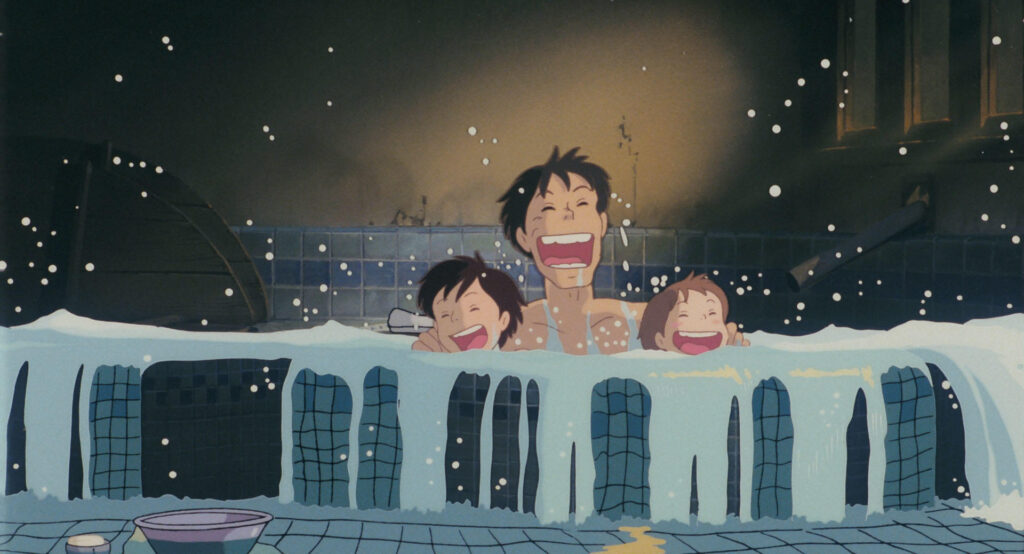
Other details in this scene show us more about Japanese bathing culture and bathroom setups. For example, the deep tub (so you can fully sit in the water) and the wooden lids to keep the water warm.
In most Japanese homes, as shown in Totoro, everyone washes first outside of the bathtub, then soaks in the same hot water (which stays clean because people aren’t washing in it).
Spirited Away is of course based on bathhouse culture! Although the bathhouse in the film is obviously magical and exaggerated, public bathhouses or sentō (銭湯 / せんとう) are still very much a thing in Japan.
In the old days, before private bathrooms were standard, every neighbourhood would have a sentō where people would go for their a daily wash.
Nowadays, even though people can bathe at home, it is still very common to go to bathhouses for relaxation purposes!
Onsen (温泉 / おんせん) are especially popular, where the water comes from natural hot springs. Many offer benefits such as different minerals in the water, or outside pools where you can enjoy a view of nature while you soak.
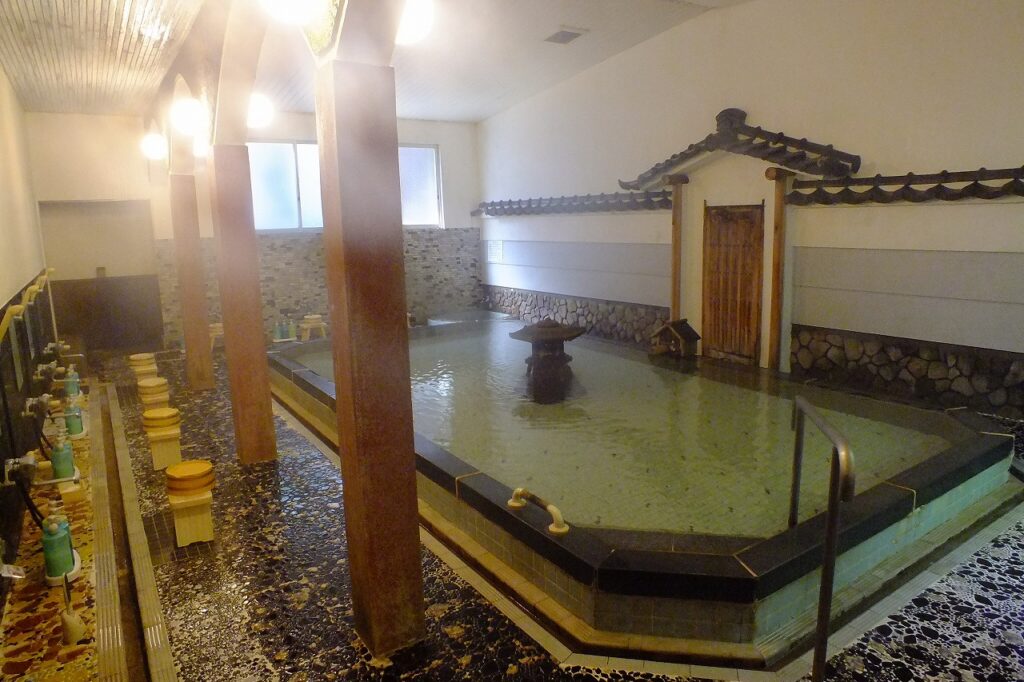

With any public bathhouses or onsen there are rules like the ones we see in Spirited Away and other movies, like taking off shoes at the front entrance, washing thoroughly before entering the bath, and keeping towels out of the water. It’s a shared space so it’s important to show respect for others.
Ghibli uses bath scenes for story and atmosphere, but they also teach us about a normal aspect of Japanese daily life.
Living with the seasons
In Japan, the four seasons are important part of daily life and culture. They shape food, festivals, school terms, clothing, and even how people decorate their homes. You can see this clearly in many Ghibli films.
For example, in Only Yesterday, a big part of the story is about farming work, which is tied closely to the time of year. Harvesting safflowers, planting crops, and talking about produce all depend on the season. The landscape changes, and daily life changes too.
The Tale of the Princess Kaguya also highlights seasonal changes. The colours, clothing, and outdoor scenes move from spring blossoms to snowy winters. Nature isn’t just part of the background, it sets the mood and rhythm of the story.
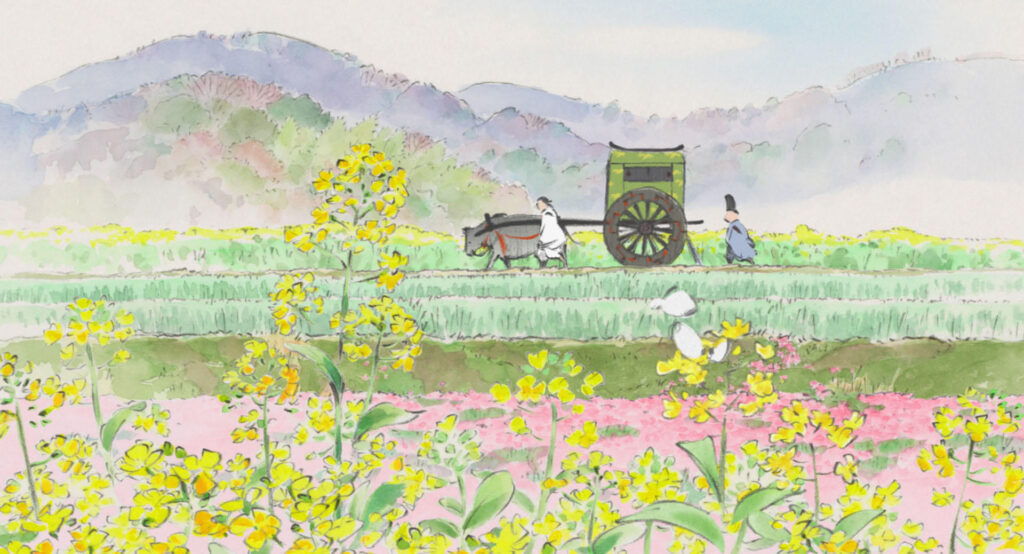
If you have ever been to Japan, you will know that appreciation for the seasons is a big part of life. Of course, there are big seasonal events such as hanami (cherry blossom viewing) and autumn leaf viewing tours.
There’s also a big emphasis on seasonal foods in restaurants, cafes and supermarkets, and many brands release limited-edition flavours.
The Ghibli movies set in Japan just reflect the changing seasons naturally as a normal part of Japanese culture.
School culture
School life in Japan can be quite different from other countries, and Ghibli shows it in a very recognisable way. Two Ghibli films that reflect everyday school culture are Whisper of the Heart and From Up on Poppy Hill.
In Whisper of the Heart, you see can see typical Japanese school uniforms, classrooms, library study sessions, and there’s also the theme of exam pressure.
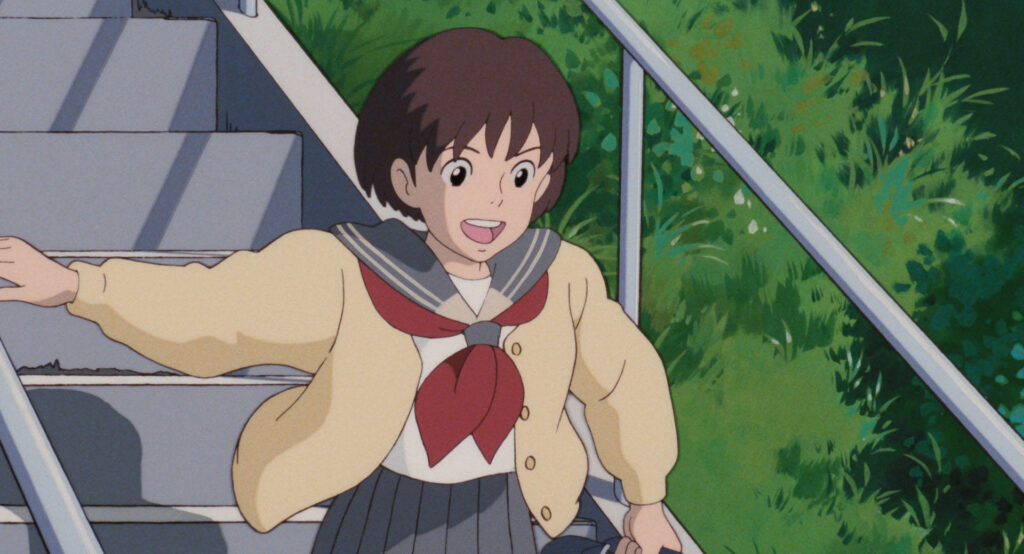
Students travel independently to and from school and manage their own time with very little supervision, which is also typical in Japan.
From Up on Poppy Hill focuses a lot on student clubs and responsibility. The students clean, organise, and even fight to protect their clubhouse.
In Japan, after-school clubs are a big part of student life. Many students stay late for sports, music, or cultural clubs, and it becomes a big part of their community and identity.
Cleaning classrooms is also normal. Students take turns tidying their own spaces rather than relying on cleaners.
Ghibli is just reflecting typical school life in Japan, but if you are not familiar with Japanese school culture you can learn a lot from watching these movies!
Respect for elders and social hierarchy
Respect for age and position is very important in Japan, and Ghibli reflects this in various ways throughout the movies.
In Spirited Away, the bathhouse runs on a clear hierarchy. Yubaba gives orders, senior workers guide new ones, and Chihiro has to learn her place before she can move forward.
Only Yesterday shows this in a more everyday setting. Older family members carry weight. Their opinions are important, and younger characters listen to them, even when they are unsure.
In Ponyo, the elderly women at the care home are central to the community. They are treated with warmth and attention, not pushed to the side. The way the children and adults interact with them reflects the importance of caring for older generations in Japan.
In real life, age often shapes how people speak and behave in Japan. Polite language changes depending on who you’re talking to.
Workplaces have seniority systems, and even in families and among friends people tend to follow this sense of hierarchy.
Early independence
In Japan, children are often given responsibility much younger than in other countries. You might be familiar with this from the Netflix show Old Enough! where small children go on little errands to the shops on their own.
Ghibli movies also show us how children tend to act more independently in Japan.
In Kiki’s Delivery Service, Kiki leaves home at 13 to begin her witch training. Living alone in a new town is treated as part of growing up. Her independence is encouraged, not questioned.
Obviously in real life, children are not sent to live independently at age 13 but even though it is a fantasy story, I feel like this aspect of the story is influenced by the idea of how children are expected to learn independence in Japan.
In Whisper of the Heart, we can see Junior High School students going about their daily life independently. For example the characters travel on trains alone, study independently, and make decisions about their futures. Adults are present, but they don’t hover.
In real life, it’s common to see young children (even elementary school students) walking to school alone without parents. Older students commute across cities by train. There’s a strong expectation that children learn to manage themselves step by step.
Japanese food culture
Food is everywhere in Ghibli! We can learn about typical Japanese foods, and also the culture and habits surrounding food in Japan.
For example, in My Neighbor Totoro, we see simple home cooking and family meals shared around a low table. The food isn’t flashy. It’s rice, vegetables, and simple, practical dishes. It’s all realistic for traditional rural Japanese households.
From Up on Poppy Hill also shows daily meal preparation. Umi cooks breakfast every morning before school, as one of her responsibilities in the family.
The ramen scene in Ponyo is probably one of the most famous food moments in Ghibli – and also one of the simplest meals to recreate at home! It’s not fancy; it’s simply instant noodles with added egg and ham. But the care and ‘magic’ that Lisa adds in preparing it turns it into a really meaningful moment.
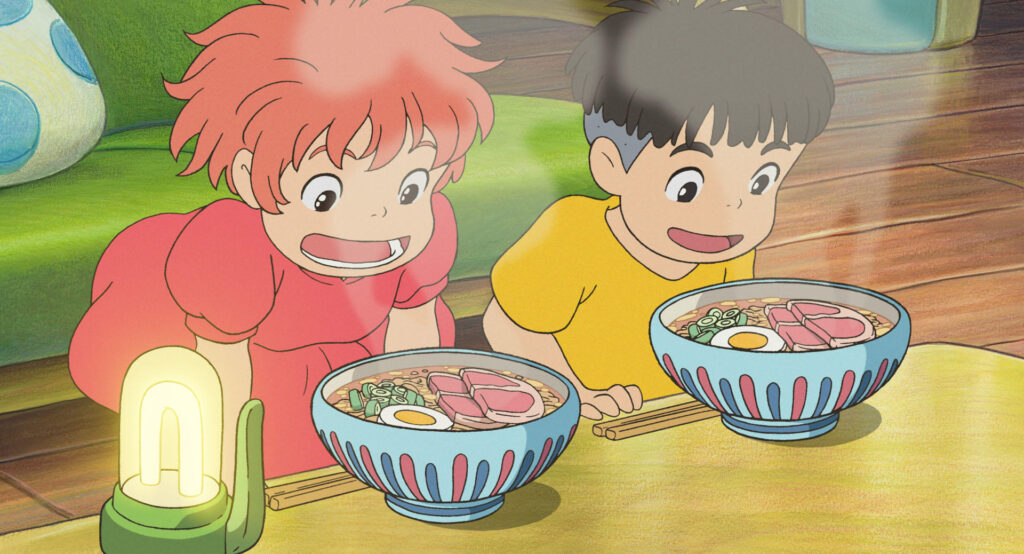
This reflects the Japanese ideas that even simple food can feel special when shared, and also that presentation and care matter!
In Spirited Away, food carries heavy symbolic meaning. Eating is connected to identity (Chihiru needs to eat to stop from disappearing) and of course her parents suffer the consequences of greed and taking without asking.
In Japan, shared meals are an important part of daily life. There are lots of small rituals around eating, like saying itadakimasu before a meal and gochisousama after. All these little moments are reflected in Ghibli movies, so we can learn a lot about Japanese food culture.
Japanese culture in Ghibli movies
Part of what makes Ghibli feel so real is the way it blends everyday life with imagination.
The stories may include spirits, witches, or magical worlds, but the settings are all based in familiar routines. People visit shrines and take baths, children walk to school, neighbours help each other.
These small details are not accidental! They reflect habits and traditions that are part of life in Japan. Once you start noticing them, the films feel even richer.
Which is your favourite Ghibli movie? Did you learn anything about Japanese culture from it?

JapanesePod101 is our top recommendation to learn Japanese online. We love the fun, current audio lessons and interactive online tools. Sign up for your free lifetime account and see for yourself!
Related posts
- 8 Ghibli Movies Set in Japan (and What They Teach Us About Japanese Culture)
- Best Ghibli Movies for Learning Japanese
- Which Studio Ghibli Movies are Based on Books?
📌Pin this for later

Rebecca is the founder of Team Japanese. She spent two years teaching English in Ehime, Japan. Now back in the UK, she spends her time blogging, self-studying Japanese and wrangling a very genki toddler.