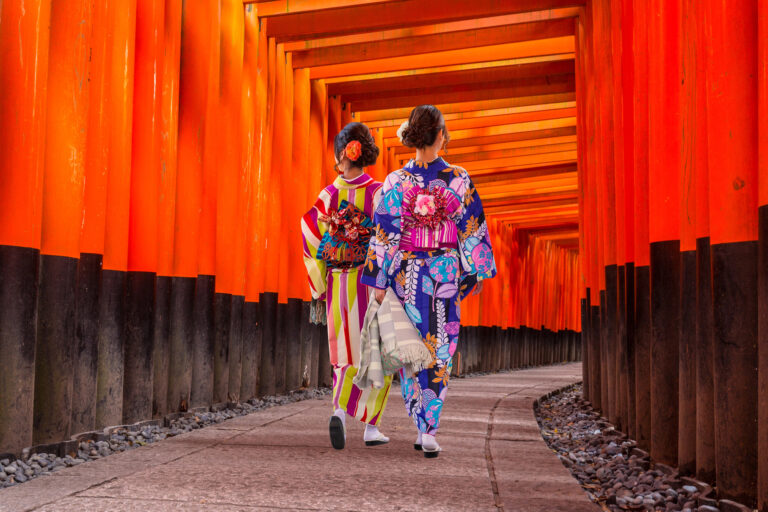
There are 16 national holidays in Japan each year.
If you’re planning a trip to Japan, it’s essential to know the dates of the Japanese national holidays to avoid disruption to your plans!
Here are all the Japanese public holidays in 2026:
| Date | Name (English) | Name (Japanese) |
| January 1 | New Year’s Day | 元日 (Ganjitsu) |
| Second Monday in January (in 2026, this is January 12) | Coming-of-Age Day | 成人の日 (Seijin no Hi) |
| February 11 | National Foundation Commemoration Day | 建国記念の日 (Kenkoku Kinen no Hi) |
| February 23 | Emperor’s Birthday | 天皇誕生日 (Tennō Tanjōbi) |
| March 20 | Vernal Equinox Day | 春分の日 (Shunbun no Hi) |
| April 29 | Showa Day | 昭和の日 (Shōwa no Hi) |
| May 3 | Constitution Memorial Day | 憲法記念日 (Kenpō Kinenbi) |
| May 4 | Greenery Day | みどりの日 (Midori no Hi) |
| May 5 | Children’s Day | こどもの日 (Kodomo no Hi) |
| Third Monday in July (2026: July 20) | Marine Day | 海の日 (Umi no Hi) |
| August 11 | Mountain Day | 山の日 (Yama no Hi) |
| Third Monday of September (2026: September 21) | Respect for the Aged Day | 敬老の日 (Keirō no Hi) |
| September 23 | Autumnal Equinox Day | 秋分の日 (Shūbun no Hi) |
| Second Monday in October (2026: October 12) | Sports Day | スポーツの日 (Supōtsu no Hi) |
| November 3 | Culture Day | 文化の日 (Bunka no Hi) |
| November 23 | Labour Thanksgiving Day | 勤労感謝の日 (Kinrō Kansha no Hi) |
What happens on Japanese national holidays?
Learning about the traditions and meaning of each Japanese national holiday is a great way to gain a deeper understanding of the culture!
Here’s a closer look at each holiday:
January 1 – New Year’s Day
The first day of the New Year and the most important holiday of the year. People visit shrines and temples for hatsumōde (the first visit of the year), enjoy special osechi ryōri dishes, and spend time with family.
🇯🇵 Learn more: New Year in Japan: Traditions, Food and Celebrations
Second Monday in January – Coming-of-Age Day
Coming-of-Age Day celebrates young people becoming adults. This is traditionally age 20, but recently changed to age 18. New adults attend ceremonies called seijin shiki, often wearing formal kimono.
🇯🇵 Learn more: January in Japan: Festivals, Traditions and Seasonal Highlights
February 11 – National Foundation Commemoration Day
National Foundation Day marks the legendary founding of Japan. There are no traditional activities; most people simply enjoy a day off.
February 23 – Emperor’s Birthday
The Emperor’s Birthday. At the Imperial Palace, the Emperor appears for public greetings. Otherwise, no specific nationwide customs.
This holiday always celebrates the date of the current Emperor. When there is a new Emperor, the date will change.
March 20 – Vernal Equinox Day
Vernal Equinox Day. Many people visit family graves as part of the spring Higan period (a Buddhist holiday observed for a week around the spring and autumn equinoxes). It’s also a time to appreciate nature.
April 29 – Showa Day
Showa Day honours Emperor Shōwa and encourages reflection on the Showa era. This marks the start of Golden Week: a week containing four national holidays, and a peak travel time in Japan!
May 3 – Constitution Memorial Day
Constitution Memorial Day. A day to reflect on democracy and peace. No set traditional activities.
May 4 – Greenery Day
Greenery Day encourages appreciation of nature. Many people visit parks, gardens, or outdoor attractions.
May 5 – Children’s Day
Children’s Day. Families with boys traditionally fly carp streamers (koinobori) and display samurai dolls for strength and health. Many children enjoy kashiwa-mochi (oak-leaf rice cakes).
Third Monday in July – Marine Day
Marine Day celebrates the ocean. Many coastal towns hold special events, but many people simply use it as a summer day off.
August 11 – Mountain Day
Mountain Day encourages appreciation of mountains. Some people use this day to go hiking.
Third Monday of September – Respect for the Aged Day
Respect for the Aged Day. Families often visit or call elderly relatives, and local communities may hold small events honouring seniors.
September 23 – Autumnal Equinox Day
Autumnal Equinox Day. As with the spring equinox, many people visit family graves during the Higan period.
Second Monday in October – Sports Day
Sports Day promotes health and physical activity. Schools and communities often hold undōkai (sports festivals) around this time.
November 3 – Culture Day
Culture Day celebrates arts, culture and academics. Cultural festivals, exhibitions and award ceremonies are held across the country.
November 23 – Labour Thanksgiving Day
Labour Thanksgiving Day honours workers and productivity. There are no widespread traditions; most people simply enjoy a day off.
Other annual events in Japan
Here are some other annual events in Japan that are not public holidays, but are still widely celebrated:
February 3 – Setsubun (節分, Setsubun)
Setsubun marks the traditional start of spring. People throw roasted soybeans to drive away evil spirits and welcome good luck.
Although it usually falls on the 3rd, the date is based on the old lunar calendar and sometimes it can fall on the 2nd or 4th.
🇯🇵 Learn more: February in Japan: Setsubun, Snow and Sweet Surprises
March 3 – Doll Festival (雛祭り, Hina Matsuri)
Known as Girls’ Day or Doll Festival. Families with daughters display ornamental dolls and eat special foods like hina-arare (colourful rice crackers).
March 14 – White Day (ホワイトデー, Howaito Dē)
A follow-up to Valentine’s Day. Men give gifts (usually sweets) to women, in return for what they received on 14 February.
🇯🇵 Learn more: How to Celebrate Valentine’s Day in Japan
April 8 – Buddha’s Birthday (花まつり, Hana Matsuri)
Celebrated at temples with sweet tea rituals and flower decorations.
July 7 – Tanabata (七夕, Tanabata)
Star Festival. People write wishes on colourful paper strips (tanzaku) and hang them on bamboo branches.
August 13-16 – Bon Festival (お盆, Obon)
Ancestral spirits are believed to return during the Obon period. Many families visit graves, hold memorial services, and take part in bon odori dances. There are lots of unique local festivals around this time.
Obon is a major travel period, but not a public holiday. Dates can vary by region.
August 6 & 9 – Atomic Bomb Memorial Days (広島・長崎原爆の日, Hiroshima/Nagasaki Genbaku no Hi)
Remembered in Hiroshima (6th) and Nagasaki (9th). Ceremonies are held in each city’s Peace Memorial Park for peace and reflection.
October 31 – Halloween (ハロウィン, Harōin)
Although not traditional, Halloween is now widely celebrated in Japan’s larger cities with costumes and street events, especially in the Shibuya district of Tokyo and in theme parks.
🇯🇵 Learn more: Does Japan Celebrate Halloween? Here’s What Really Happens
November 15 – Shichi-Go-San (七五三, Shichi-Go-San)
Celebrates children aged 3, 5 and 7. Families visit shrines to pray for health and growth.
December 24–25 – Christmas (クリスマス, Kurisumasu)
Christmas is not a public holiday in Japan. It’s celebrated as a lighthearted, romantic season.
People often eat Christmas cake (in Japan, this is a sponge cake with strawberries and cream) and fried chicken, and there are events and gifts for young children.
🇯🇵 Learn more: Christmas in Japan: How to Celebrate Like a Local
December 31 – New Year’s Eve (大晦日, Ōmisoka)
New Year’s Eve. Families clean the home (ōsōji), eat soba noodles (toshikoshi soba), and watch NHK’s Kōhaku song contest.
Rebecca is the founder of Team Japanese. She spent two years teaching English in Ehime, Japan. Now back in the UK, she spends her time blogging, self-studying Japanese and wrangling a very genki toddler.