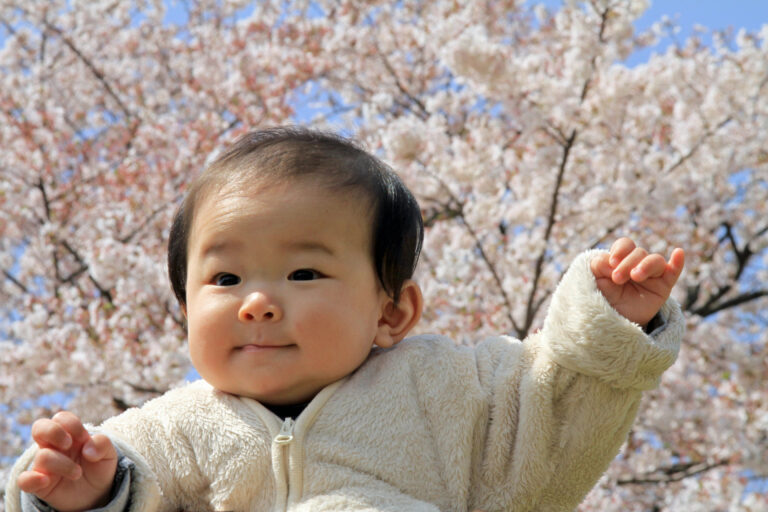
The most common word for baby in Japanese is akachan (赤ちゃん / あかちゃん). But, as always, there are a few different ways to say ‘baby’ in Japanese depending on the context, child’s age or formality of the situation!
In this article we will walk you through the various terms and when to use them, as well as some baby-related vocabulary and child-directed speech.
Side note: this post is about literal babies. If you are looking for what to call your boyfriend or girlfriend in Japanese, check out our post on Japanese terms of endearment!
Ways to say ‘baby’ in Japanese
Akachan
赤ちゃん
Baby
The term akachan (赤ちゃん / あかちゃん) is the most common word for ‘baby’ in Japanese.
If you happened to have read through our post about ‘colours’ in Japanese, you may already know that aka 赤 actually means ‘red’! Chan is an honorific suffix used to express affection and cuteness.
As to why babies are referred to as akachan in Japanese, it may be down to the red hue of a newborn’s skin. Aka also has an ancient meaning of ‘brightness’ which may come into play, as welcoming a baby into the world is a time of brightness and hope!
Akachan is a general word that can be used in many situations — casual or formal, whether referring to your own baby or someone else’s.
It’s a term used when you want to show warmth and tenderness, which is generally all the time when referring to a cute baby!

Bebii
ベビー
Baby
Bebii (ベビー / べびー) is of course a loan word coming from the English term ‘baby’.
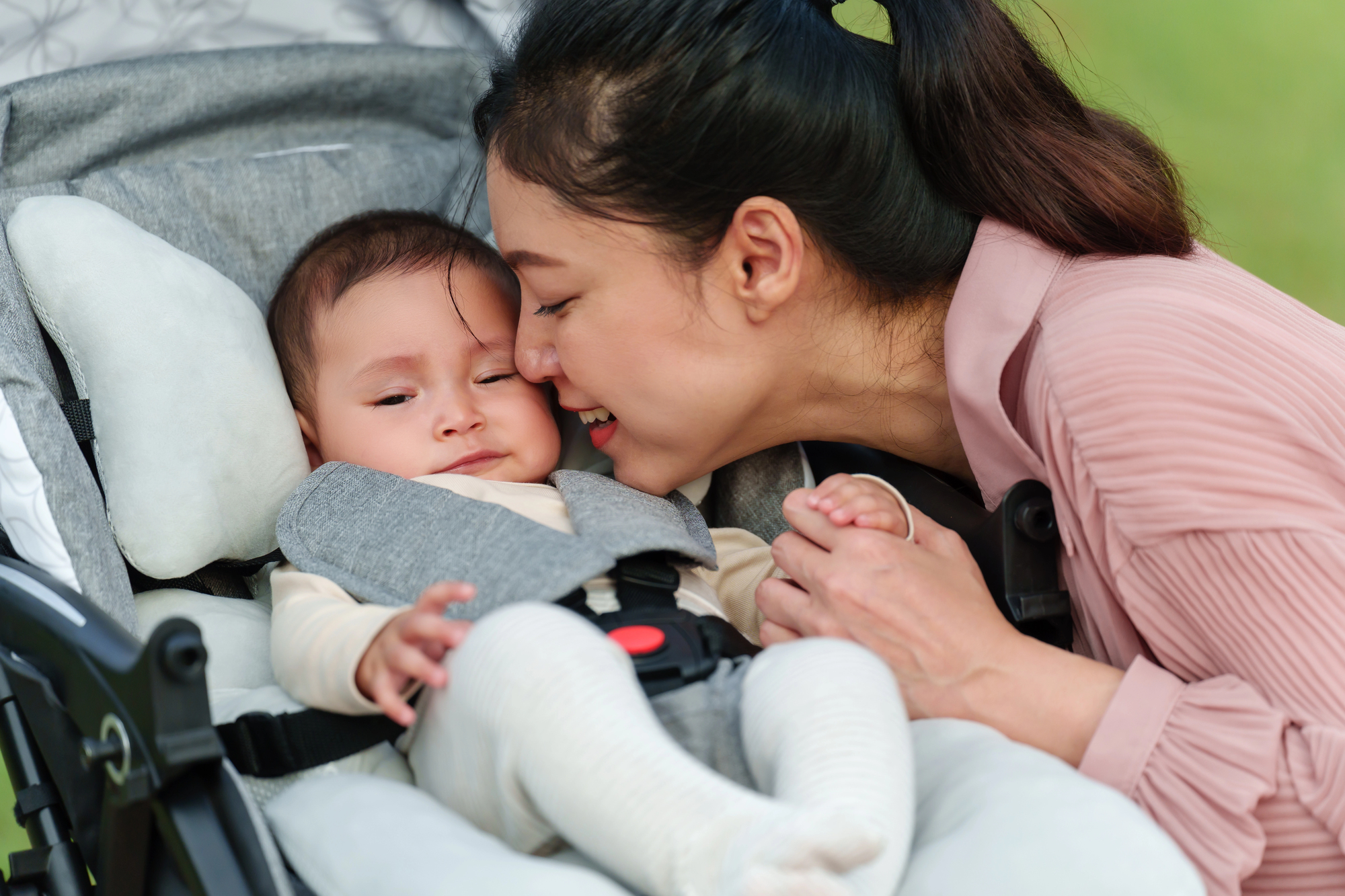
Unlike akachan, it is not used as much when referring to an actual baby itself, but more for baby-related things. For example, ‘stroller’ in Japanese is bebii kaa (ベビーカー / べびーかー) aka ‘baby car’!
Kodomo
子供
Child
Kodomo (子供 / こども) is a broader term which is generally used to refer to ‘children’, from infancy through to adolescence. It can be used to speak of your own children, someone else’s or just children in general.
Akachan is more specifically a small infant while kodomo evokes an image of a developing child.
Though, most parents would insist that their child will always be their ‘baby’, no matter their age!
Shinseiji
新生児
Newborn
Shinseiji (新生児 / しんせいじ) is a more matter-of-fact, medical term for a baby. It is used to refer to a newborn child, just a few weeks old.
You are likely to hear this technical term being used in official legal or medical contexts. It is definitely not as affectionate a term as akachan or bebii, so it’s better to avoid using unless speaking about this particular stage of development of a baby.
Nyuuji
乳児
Infant (under 1 years old)
Nyuuji (乳児 / にゅうじ) is another kind of technical term used to describe the developmental stage of a baby. It relates to an infant who is in the early post newborn stage, until about 12 months old.
Like the previous term, it is formal and technical, reserved for use in medical or childcare environments.
Youji
幼児
Toddler (over 1 years old)
Youji (幼児 / ようじ), like the previous two terms, describes a baby’s developmental stage. Youji indicates a child who is older than 12 months but not quite school age yet, just learning to walk and talk.
Youji depicts what we may describe as a ‘toddler’ in English.
Baby-related vocabulary in Japanese
If you find yourself in a situation where you are using the above terms for ‘baby’ then you may also benefit from learning some additional baby-related terminology!
Check out the table below to familiarize yourself with some practical vocab terms relating to the early stages of parenthood.
| English | Kanji | Hiragana | Romaji |
| Diaper / nappy | おむつ | おむつ | omutsu |
| Baby bottle | 哺乳瓶 | ほにゅうびん | honyuubin |
| Breastfeeding | 授乳 | じゅにゅう | jyunyuu |
| Pregnant | 妊娠 | にんしん | ninshin |
| Childbirth | 出産 | しゅっさん | shussan |
| Childcare | 育児 | いくじ | ikuji |
| Raising a child | 子育て | こそだて | kosodate |
| Maternity leave | 産休 | さんきゅう | sankyuu |
| Hold (a baby) | 抱っこ | だっこ | dakko |
Baby talk in Japanese
All of the information so far outlines the useful terms needed for smooth communication with adults about babies. But what about speaking with babies?!
Each culture and language has their own unique ‘dialects’, so to speak, when it comes to baby talk.
In Japanese, baby talk is often onomatopoeic – think animal or vehicle noises.
Baby-talk verbs are also commonly constructed by verb reduplication + suru (する), meaning ‘to do’, for a playful, soft and easy-to-understand way of expressing everyday actions.
| English | Kanji | Hiragana | Romaji |
| Baby talk | 赤ちゃん言葉 | あかちゃんことば | akachan kotoba |
| Dog | ワンワン | わんわん | wan wan |
| Cat | ニャンニャン | にゃんにゃん | nyan nyan |
| Food | まんま | まんま | manma |
| Shoes | くっく | くっく | kukku |
| Car | ブーブー | ぶーぶー | buu buu |
| Sleep | ねんね (する) | ねんね (する) | nenne (suru) |
| Put away | ないない (する) | ないない (する) | nai nai (suru) |
| Goodbye | バイバイ | ばいばい | bai bai |
Related posts
- How to Say Mother in Japanese
- How to Say Father in Japanese
- How to Say Daughter in Japanese
- How to Say Son in Japanese
Want to learn more practical, everyday Japanese? Our top recommended course is JapanesePod101.
Sign up for your free lifetime account and see for yourself! (No credit card required.) Or check out our full JapanesePod101 review here for a little look inside.

JapanesePod101 is our top recommendation to learn Japanese online. We love the fun, current audio lessons and interactive online tools. Sign up for your free lifetime account and see for yourself!

Hannah is a half Irish/half Japanese girl living in Ireland. Her love for Japan and the Japanese language led her to studying languages and translation in university where she specialised in Japanese. She spent a year studying abroad at Rikkyo University in Tokyo. In her free time, Hannah enjoys using her sewing machine to upcycle clothes and create new pieces!